
Why Pool Water Becomes Unbalanced in Summer: 7 Warning Signs
Learn seven common warning signs of unbalanced pool water during summer, including cloudiness, algae, irritation, scaling, staining, and poor circulation.

Why Summer Conditions Disrupt Pool Water Balance
During summer, pool water can change quickly because of high temperatures, strong sunlight, evaporation, rain, and increased swimming activity. These conditions increase sanitizer demand, concentrate minerals, and place additional strain on circulation and filtration.
In the Sacramento area, prolonged heat can make chemical changes more noticeable. Changes in water clarity, pool surfaces, swimmer comfort, circulation, or equipment operation can signal an imbalance. Early testing can help identify the cause before the condition becomes harder to correct.
1. The Pool Water Becomes Cloudy
Cloudy water may develop when sanitizer levels fall, fine debris remains suspended, or filtration is not working effectively.
Check:
- Whether the pool floor is clearly visible at its deepest point
- Whether cloudiness appeared after rain or heavy use
- Whether the pump is running and water is returning through the jets
Avoid swimming when visibility is poor. Empty baskets, confirm water movement, and test the water. If clarity does not improve, Schedule professional pool water testing can determine whether chemistry or filtration needs attention.
2. Algae Begins Growing on Pool Surfaces
Algae can appear when sanitizer levels fall, circulation weakens, or debris remains in the water.
Look for:
- Green, yellow, or dark discoloration
- Slippery steps, walls, or floors
- Growth that returns after brushing
Recurring algae requires complete testing and correction of sanitizer, circulation, filtration, or debris problems that allow it to return.
3. Swimmers Experience Skin or Eye Irritation
Red eyes, dry skin, or discomfort after swimming may be associated with improper pH, sanitizer imbalance, or elevated combined chlorine.
Pay attention to:
- Burning or red eyes
- Dry or itchy skin
- Irritation affecting several swimmers
Stop using the pool until the water is tested. CDC guidance places pool pH between 7.0 and 7.8 to support effective disinfection, swimmer comfort, and equipment protection.
4. A Strong Chlorine Odor Develops
A strong chemical smell does not always mean the pool contains too much effective chlorine. Chloramines form when chlorine combines with substances introduced by swimmers and can contribute to odor and irritation.
Notice whether:
- The odor increases after heavy use
- Swimmers report eye or respiratory irritation
- The smell remains after circulation
Do not add chemicals based on odor alone. Testing should compare free chlorine, combined chlorine, and pH before treatment is selected. The CDC identifies chloramines as combined chlorine compounds that can irritate the skin, eyes, and respiratory system.
5. White Scale Appears on Tile or Equipment
White or rough deposits may indicate high pH, elevated calcium hardness, high alkalinity, or concentrated minerals caused by evaporation and refill water.
Inspect:
- Tile and the waterline
- Return fittings and small openings
- Equipment surfaces for buildup
Do not use harsh scraping tools. Test the water first so the chemistry contributing to the deposits can be identified, then Schedule pool water balancing service if scale continues to form.
6. Stains or Corrosion Begin to Appear
Low pH can contribute to corrosion and surface damage, while low total alkalinity may allow pH to change rapidly. Dissolved metals can contribute to brown, green, or dark staining.
Watch for:
- Rust around ladders or fittings
- Brown, green, or dark stains
- Pitting near metal components
Do not treat every stain the same way. Organic staining, dissolved metals, and surface damage require different corrective methods, so request a professional pool inspection before treatment begins.
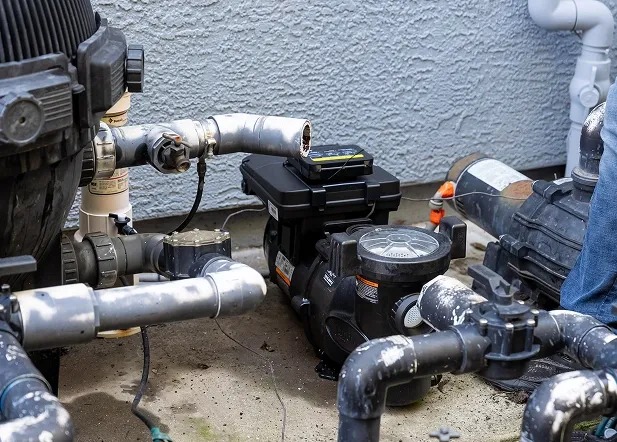
7. Circulation or Filter Performance Begins to Decline
Weak circulation or filtration can prevent sanitizer from dispersing evenly and allow debris to remain in the water, making stable chemistry harder to maintain.
Check for:
- Weaker return flow than usual
- Unexpected filter-pressure changes
- A pump that loses prime or sounds abnormal
Turn equipment off if it runs dry, leaks, overheats, or makes severe noises. Nevergreen Pools provides water testing and adjustment, pool rebalancing, filter cleaning, and circulation checks as part of its pool services.
When Professional Pool Water Testing Is Needed?
Recurring cloudiness, algae, irritation, scaling, staining, or circulation problems need a complete evaluation. Professional testing can assess pH, free and combined chlorine, total alkalinity, calcium hardness, and stabilizer levels.
Testing several water factors together helps identify whether the problem comes from sanitizer demand, mineral concentration, unstable pH, circulation, or filtration.
Frequently Asked Questions:
Why does pool water become unbalanced faster in summer?
Heat, sunlight, evaporation, rain, debris, and increased swimming can change sanitizer demand and mineral concentration more quickly. More frequent use also introduces additional contaminants into the water.
How often should pool water be tested during summer?
The CDC recommends testing disinfectant and pH at least twice daily and more often when the pool receives heavy use. Retest after major rain, extreme heat, or a noticeable change in water quality.
Is a strong chlorine smell a sign of too much chlorine?
A strong odor often indicates chloramines rather than excessive free chlorine. Testing is needed because smell alone cannot confirm whether sanitizer and pH levels are within the proper range.
Can clear pool water still be unbalanced?
Pool water can appear clear while pH, sanitizer, alkalinity, hardness, or stabilizer levels remain outside the appropriate range. Visual clarity does not replace regular testing.
When should homeowners contact a pool professional?
Professional service is appropriate when problems return after routine cleaning and testing, chemical readings remain unstable, or circulation and equipment performance change.
Keep Pool Water Balanced Throughout Summer
Summer pool problems often begin with small changes in clarity, surfaces, swimmer comfort, or water movement. Early testing can identify the cause before the condition becomes harder to manage.
If routine adjustments do not restore stable water, Schedule professional testing and rebalancing with Nevergreen Pools. Accurate testing replaces guesswork with adjustments based on the pool’s actual condition.


Let’s Talk About Your Pool
Reach out to our team for service questions, scheduling, or next steps, clear communication starts here.


From the People We Serve
Recognized for the Way Our Team Shows Up


Very responsive - I called three other spa services companies and no one called me back. Kyle picked up right away. Very knowledgeable - Kyle knows his stuff! Products and how to. Not only is my problem fixed, but I’m a better spa owner now.
Read moreLisa Karle
Very happy we found Nevergreen Pools. They provide impeccable service consistently. Our pool and spa have never been so clean and clear. The owner takes great pride in their work. We were so pleased with their service we were confident to refer them to a neighbor.Highly Recommend!
Read moreLinda L.
Thank you Nevergreen for freeing me of all the worries of my pool so that I may come home from work and enjoy it rather than perform maintenance.
Read moreChris C.
Standard pool service can be like visiting the dentist for a cleaning- necessary, but not exciting. It isn't until you find someone who truly cares about their craft that you realize how different it can be. Our pool isn't just clean, it sparkles. Recommendations for improvements are made, but not pushed. Service is consistent and my needs are considered proactively. Kyle's attention to every detail demonstrates the difference between a pool company that is focused on churning pools vs. the concierge service that comes from an owner who takes pride in their results. Highly recommend.
Read moreRoy M.
This was the third time we have had them come out to keep our filter running. This time we were under the impression that we were going to need to replace the pump for almost $4000. When Nathan came out, instead of just blindly changing it, he pointed out some minor things that needed to be done and only charged the diagnostic fee. We have had Kiani (on the spelling) and now Nathan out, and both have provided excellent service. Highly recommend this company!
Read moreTravis M.
Nevergreen Pools is the best! They've always kept my pool looking great, I've never had to worry the pool since Nevergreen took over the weekly service.
Read moreSam A.
Keoni came on time and was very professional. He was super knowledgeable about every piece of the equipment as well as the iAquaLink app. He not only got my system running, but helped me adjust the parameters to save money on electricity. He pointed out what issues might arrive in the near future and without trying to upsell just let me know what to keep an eye out for. I already have pool cleaning services, but will absolutely use Nevergreen pools for all my pool repair needs.
Read moreJames H.
Jeff has great work ethic & most pleasant demeanor which is reflected in how the pool looks when he's done. I try to fill in between his visits but he makes that task minimal. We've been pool owners for almost 50 years, the first half of that time I managed the pool condition, the second half we've had it professionally done & Nevergreen offers the best service in this experience. The after-service email photo say it all & a nice touch.
Read moreGeorge A.
Nevergreen Pools has been incredible to work with from start to finish. Their team is professional, reliable, and really knows their stuff when it comes to pool maintenance and repairs. Scheduling was super easy, and I appreciated the transparent pricing--no hidden fees or surprises. It's clear they care about their customers and take pride in their work. Highly recommend if you're looking for top-notch pool service in the area!
Read moreConnor C.
Servicing Areas
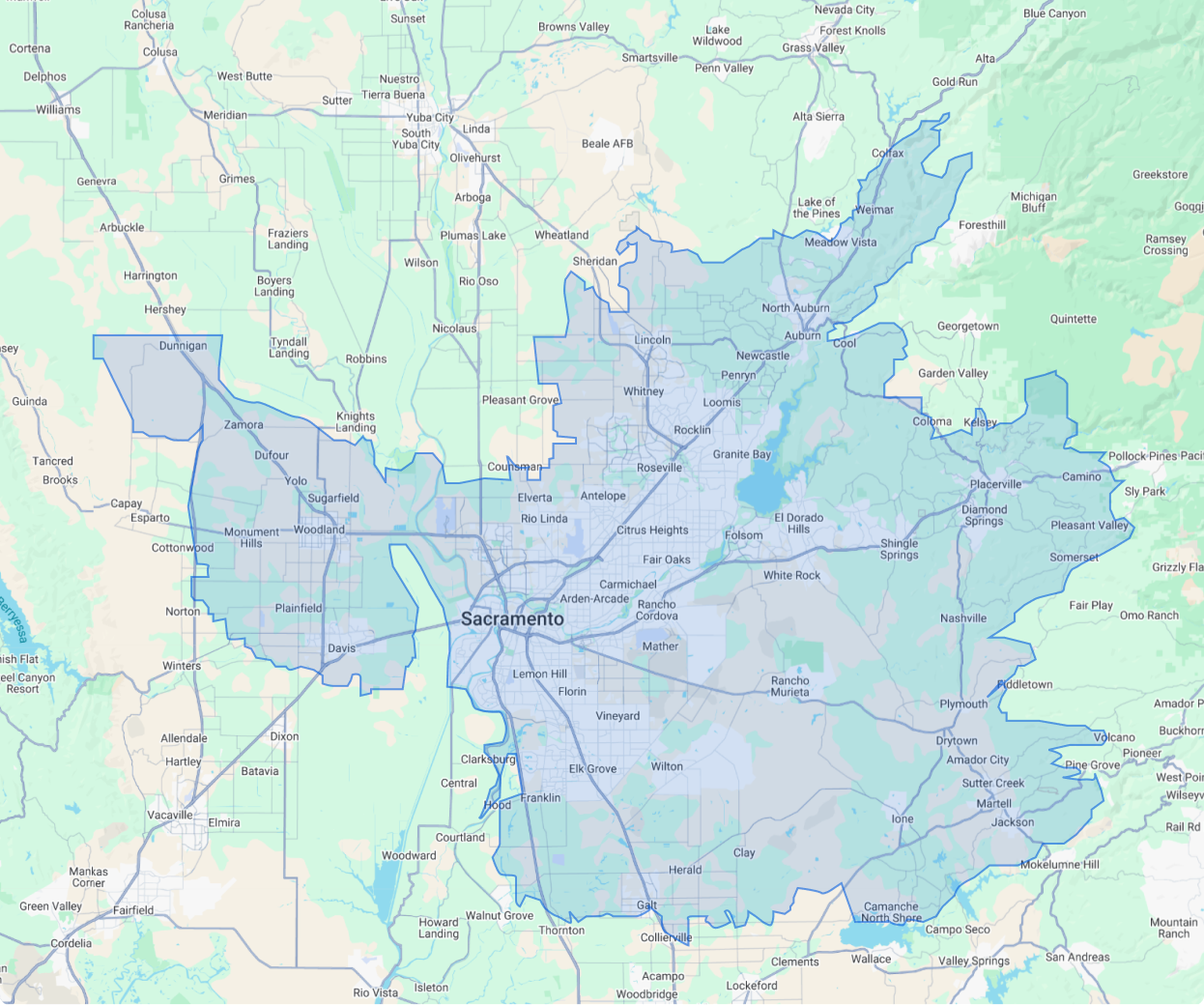
Proudly Serving Northern California

El Dorado Hills
Cameron Park
Fair Oaks
Folsom
Placerville
Shingle Springs
Granite Bay
Rocklin
Roseville
Woodland
Davis
Sacramento
Lincoln
Elk Grove
Jackson
Ione


