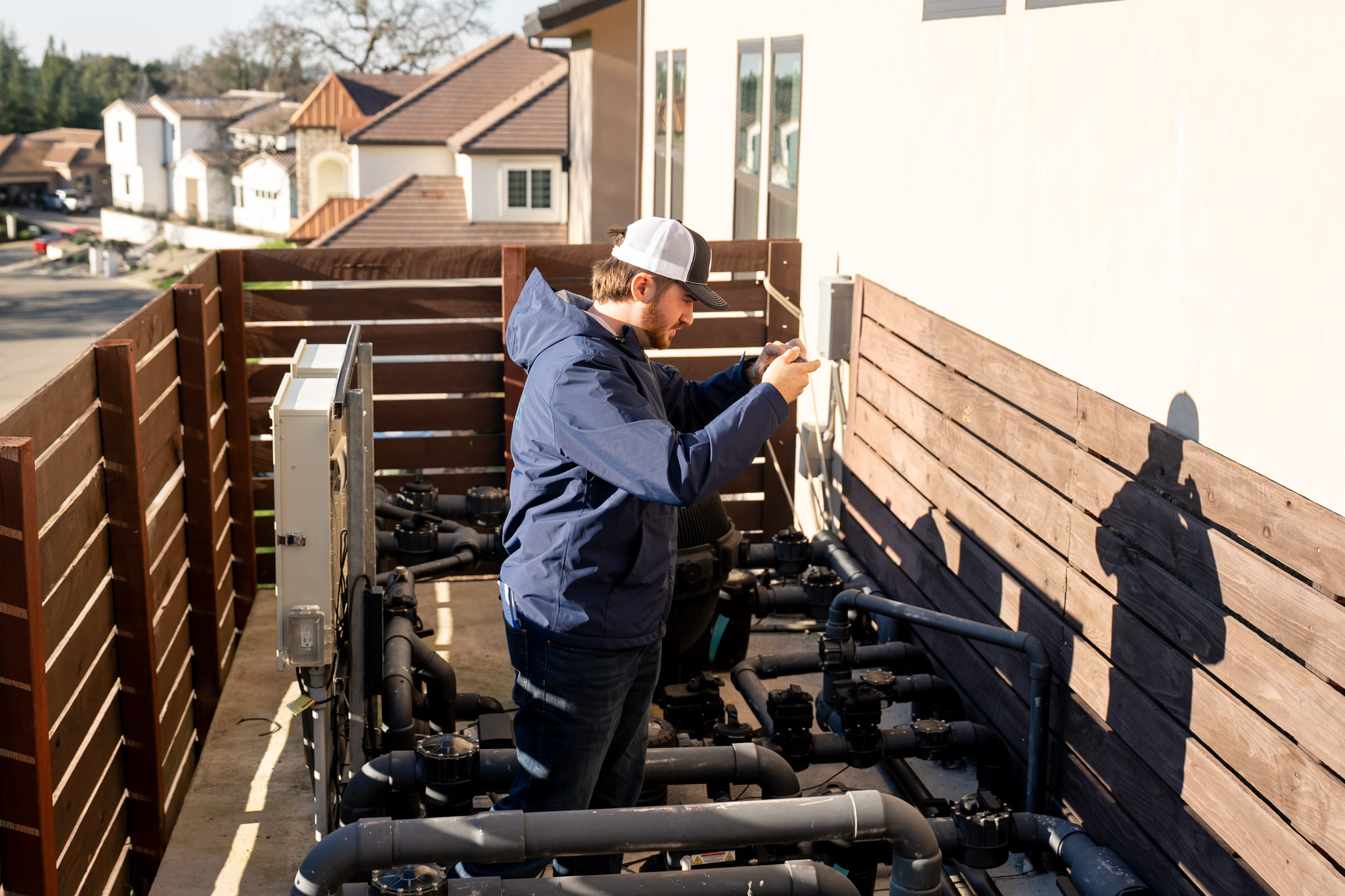
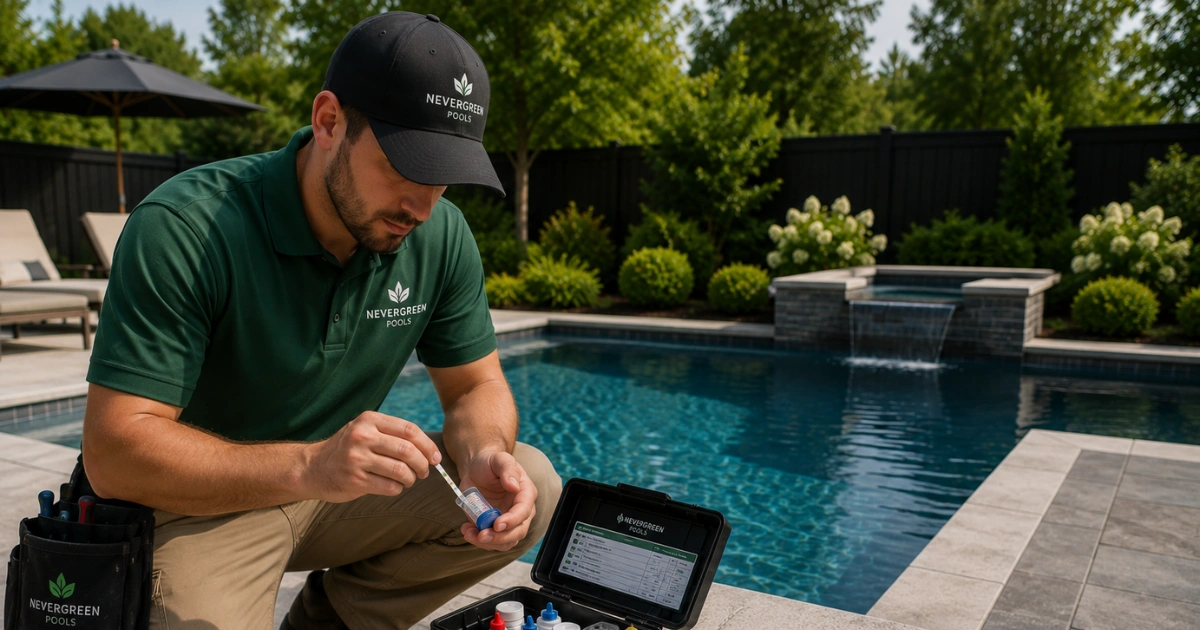
Nevergreen Pools provides pool pump repair in Chandler, covering shaft seal leaks, noisy or failing bearings, motors that won't start, lost prime, cracked pump housings, clogged impellers, air leaks at the lid o-ring, and the call between repairing a motor and replacing the whole pump with a variable-speed unit.
Call us if the returns are barely pushing water into the pool and it takes longer to circulate and clear, if the pump is grinding, screeching, or humming without starting, if you find water pooling on the equipment pad or dripping from the pump housing near the shaft, if the pump loses prime and has to be primed by hand every time it runs, if the breaker trips when the pump tries to start, if air bubbles out of the return jets because the lid o-ring has lost its seal, or if the pump runs but pushes almost no water because the impeller is clogged.
We serve the area in partnership with Beyond Pool Cleaning, a pool service company based nearby. Call to get a technician out, or book your first visit online.
How We Diagnose and Fix a Pump
We start at the pump, not the panel. A tech pulls the lid and checks the basket for debris, then checks the o-ring for flat spots, dry cracking, or a groove that has worn down enough to let air in on the suction side. Air pulled in through the lid seal shows up as bubbles at the returns and a pump that loses prime overnight, so that gets fixed or the o-ring gets replaced before anything else is touched.
If the pump is making noise, we separate a motor problem from a hydraulic one. A grinding or screeching sound usually means the bearings in the motor are worn and the motor needs to come off the wet end. A humming pump that will not start is almost always the run capacitor, which we test and swap on the spot rather than guessing. A shaft seal leak shows up as water on the equipment pad under the motor, coming from the seal plate between the motor and the wet end, and it gets replaced along with the gasket rather than just tightened down. A cracked pump housing, from age or from a freeze years back, gets replaced rather than patched, since a patched housing will crack again under pressure.
For a pump that loses prime, we check the suction side for the actual leak instead of just re-priming it and hoping it holds. That means checking the pump lid o-ring, the drain plugs and their gaskets, and the unions on either side of the pump for a loose fit or a cracked thread. A clogged impeller gets pulled and cleared, and if the impeller or diffuser is worn from years of running with debris, we replace those parts rather than leaving a partially worn impeller in a rebuilt pump.
When a pump needs more than a part, we give a straight answer on repair versus replacement. A single-speed pump with a bad capacitor or a worn seal is usually worth repairing if the motor and wet end are otherwise sound. A pump with bearings that are already howling, a cracked housing, or a motor that has failed more than once is not worth repairing again, and we recommend replacement with a variable-speed pump instead. Any variable-speed pump we install gets programmed with separate speeds for filtration, cleaning, and spa or water feature operation, since running it on one fixed speed wastes electricity every day it operates.
- Check the pump lid o-ring and basket for the source of air leaks and lost prime
- Test the run capacitor and check the motor for worn bearings or shaft seal leaks
- Inspect the pump housing, unions, and drain plugs for cracks or leaks
- Clear or replace a clogged or worn impeller
- Decide on motor swap versus full pump replacement based on the wet end's condition
- Program any new pump as variable-speed with speeds set for filtration, cleaning, and spa
What a Fixed Pump Looks Like
A pump that's been repaired right runs quiet, holds prime without help, and pushes enough water to keep the returns moving and the pool circulating on schedule. No water on the equipment pad, no air in the returns, no breaker tripping when it starts. Pools with a spa or water feature run off the same pump, so a weak pump can leave the spa not filling or a water feature barely trickling as well. If a pump problem sits too long, the pool pays for it: a struggling pump that isn't circulating enough water lets chlorine demand outrun what's being added, and the water can turn cloudy or start growing algae even with a normal chemical routine. A pump running dry on a bad prime, or straining on failing bearings, is also more likely to take the motor with it, turning a seal or capacitor repair into a full pump replacement.
If you're seeing any of these signs at your pump, call us or book online and we'll get a technician out to look at it before a small part turns into a bigger repair.
Related services in Chandler: Pool Repair in Chandler and Weekly Pool Service in Chandler.