Professional Pool Service
Pump Installation & Upgrades in Manteca
Variable-speed pump installation and upgrades in Manteca, CA. Title 24 sizing, speed programming, quieter operation and real energy savings year round.
Professional Pool Service
Variable-speed pump installation and upgrades in Manteca, CA. Title 24 sizing, speed programming, quieter operation and real energy savings year round.
It is the middle of August in Manteca, the thermometer has been over 100 for two weeks straight, and the pump on the equipment pad is loud enough that you close the back windows at night. The electric bill came in higher than the month before, and the water still looks cloudy by Friday even though the pump ran eight hours a day. That combination, loud pad, high bill, water that never quite clears, is almost always the same story: an old single-speed pump that is oversized for the pool and has no way to run any slower.
Single-speed pumps know one setting, full throttle. They push water fast, burn watts, and make noise, and the fast flow actually works against the filter, because water moving too quickly through the media does a worse job of catching the fine almond orchard dust that rides in on the delta breeze most evenings. Swapping that pump out is the single biggest change most Manteca pool owners can make on their equipment pad, and in California the code has already made most of the decision for them.
Nevergreen Pools handles pump installation & upgrades in Manteca in partnership with Vintage Pool Service, a longtime Central Valley company based right here on East Yosemite Avenue. The crew doing the work already knows what this water does to equipment, what the orchards drop into pools every spring, and which pumps hold up through a run of 100 degree days from late May into October.
California's Title 24 energy standards require that replacement pool pumps above a small horsepower threshold be variable-speed. In practice that means a standard residential pump that dies gets replaced with a variable-speed unit. That is code, not an upsell, and any licensed contractor working in San Joaquin County builds to it. The code is on your side here. A variable-speed pump uses a permanent magnet motor and a controller that lets it run anywhere from a slow crawl to full output, and the power a pump draws falls off sharply as speed drops. Cut the speed in half and you cut the draw by far more than half, which is why a pump can run longer hours and still cost less to operate than the old one did on a short schedule.
Sizing is where replacements go wrong most often. The instinct is to match the horsepower stamped on the old motor, but that number was usually picked by a builder who wanted margin, not efficiency. Horsepower gets sized to the pool instead: total gallons, the diameter and run length of the suction and return lines, head loss through the filter and heater, whether there is an attached spa, and whether the pool has solar panels or in-floor cleaning heads. Plenty of older plaster pools in the central part of Manteca are running 1.5 or 2 horsepower motors on plumbing that was never meant to carry that much flow, which shows up as noise, cavitation at the pump basket, and strain on the filter. Newer pebble-finish pools in the subdivisions toward Lathrop and Ripon usually have better plumbing but were still fitted with more pump than the pool needs.
Undersizing is a real risk in the other direction, so the sizing conversation covers everything the pump has to do:


A variable-speed pump is only worth what you paid for it if the speeds get programmed around how the pool is actually used. Left on factory defaults, it runs like an expensive single-speed. Once the pump is set, wired, and turning, the presets get built out: a low filtration speed that runs long hours and still turns the water over completely, a higher speed for the suction cleaner or in-floor heads, and a full speed for spa jets or a waterfall. Slow filtration is not just about watts. Water that moves through the filter slowly gets cleaned better, which matters when almond bloom in spring and dust off the orchards are loading the media week after week.
Two local details shape the schedule. Manteca's municipal water is hard, high in calcium and alkalinity, and pH climbs steadily, so scale wants to form on tile and inside the heater. Longer, gentler run time keeps chemicals mixed and keeps that chemistry from stratifying, which makes it easier to hold pH down. And any heater on the pad has a minimum flow rate, so the low speed gets set above that floor, never below it, or the heater will short cycle or lock out on a cold tule fog morning in January.
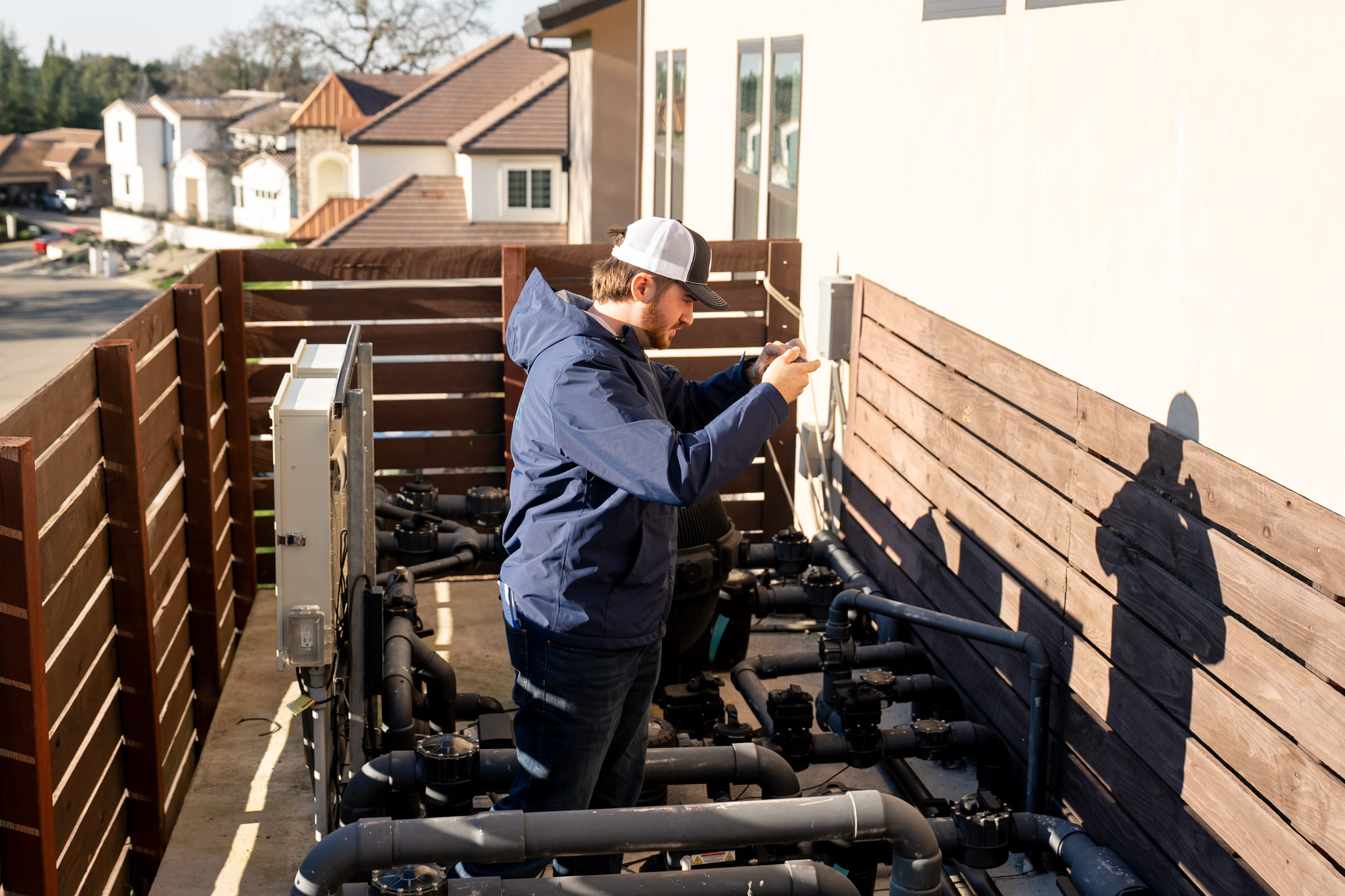
The last part of any pump installation is the part that determines whether you call back in a month. A new pump gets primed by hand, filled and bled, then watched at the basket lid. A clear stream with no swirling air means the suction side is tight. Bubbles mean air is getting pulled in somewhere, usually at a union o-ring, the lid gasket, or a drain plug that did not get sealed. Every union at the pump gets checked under running load, not just finger tight and forgotten, and the o-rings get lubricated so they seal instead of pinch. The filter pressure gauge gets a fresh baseline reading written down, because that number is how you will know later when the filter needs cleaning. The motor bonding lug gets reconnected, which is a code item and a safety item both.
Most owners notice three things in the first week: the pad is quiet enough to sit next to, the water clears faster, and the meter slows down. That is the whole point of pump installation & upgrades in Manteca, and it is the same work we do for pools in Lathrop, Ripon, and Tracy.
Related services in Manteca: Pool Pump Repair in Manteca and Filter Installation in Manteca.