Nevergreen Pools provides pool pump repair in Peoria, covering shaft seal leaks, worn motor bearings, capacitors that won't kick the motor over, lost prime, cracked pump housings, clogged impellers, air leaks at the lid o-ring, and the call between repairing a motor and replacing the whole pump with a variable-speed unit.
Call us if you already replaced the capacitor and the motor still won't start, if the pump hums but the shaft doesn't turn, if it's grinding or squealing on bearings that are wearing out, if you keep re-priming it and it loses suction again within a day, if there's a steady drip or fine spray coming from behind the pump housing, if flow through the returns has dropped off even though the pump is running, or if the breaker trips every time the pump kicks on.
We serve this area in partnership with Beyond Pool Cleaning, a pool service company based nearby. Call to get a technician scheduled, or book your first visit online.
Diagnosing and Fixing the Pump
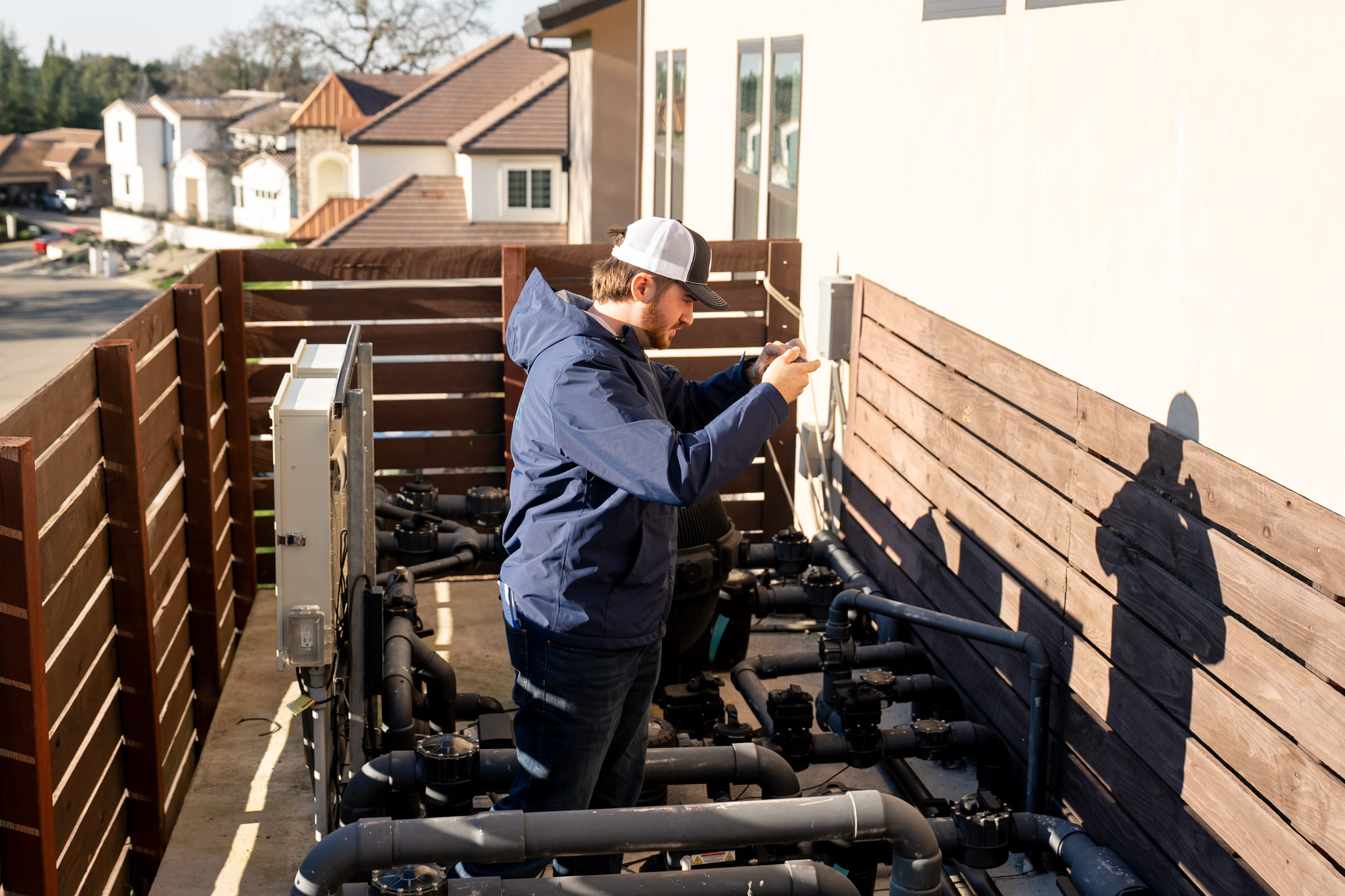
We start at the pad with the pump running, since most pump problems show themselves within the first few minutes. A motor that hums but won't spin is almost always a bad capacitor or a seized shaft, not a burned-out motor, so we test the capacitor before we recommend replacing anything larger. A pump that's grinding or squealing has bearings wearing out, and we pull the motor before it seizes rather than waiting for a full failure. If the pump keeps losing prime, we check the lid o-ring and the strainer basket lid for air leaks first, since a hairline crack in the housing or a dried-out o-ring pulls air into the line and keeps the pump from holding suction no matter how many times you re-fill the pot. A cracked housing gets replaced, not patched, because a patched housing cracks again under pressure. A clogged impeller shows up as strong pressure at the pump but weak flow at the returns, so we pull the diffuser and clear it before we look at anything downstream.
- Test the capacitor and start relay before condemning the motor
- Check the shaft seal and lid o-ring for wear or scale letting air into the line
- Listen to the bearings and pull the motor before it seizes
- Inspect the housing and seal plate for hairline cracks
- Clear the impeller and diffuser and check flow at the returns
- Check voltage and amp draw at the motor to confirm it's pulling correctly
Matching the Repair to the Equipment
This area has a mix of older plaster pools running original single-speed pumps from the 1980s and 1990s and newer pools with pebble finishes, cartridge filters, salt systems, and variable-speed pumps already installed. On the older equipment, a straight motor swap is often the right call if the housing, seal plate, and impeller are still in good shape and only the motor has failed. On newer variable-speed equipment, we repair the control board or motor rather than replace the whole pump, since the wet end is usually still good and the failure is electronic, not mechanical. When a single-speed pump on an older pool does need full replacement, we install a variable-speed unit and program separate speeds for filtration, cleaning, and any water features. A lot of HOAs in this area also have rules on equipment noise, and a variable-speed pump running its normal filtration speed is quieter than a single-speed pump ever gets at full speed. Hard water here scales the seal faces and volute over time, which is part of why seals fail sooner than they would with softer water, and long summer run times mean a bearing or seal that's already marginal tends to fail in the hottest months, not the mild ones. Dust from monsoon storms works into the strainer basket and skimmer line too, so we check the strainer lid and basket for wear any time we're already at the pad for a pump repair.
What a Repaired Pump Should Do
A pump that's fixed right holds prime the moment you turn it on, runs quiet at the pad, and pushes full flow through the returns and any water features without you having to re-prime it every few days. Filter pressure should read normal and only climb between cleanings, not right after you backwash. If you're still hearing a grind, still losing prime, or still watching the breaker trip after a repair, something got missed instead of fixed. A pump running correctly also draws the amperage it's rated for, not more, which is what keeps the motor from running hot and failing early.
Left alone, a bad capacitor eventually takes the motor with it, a bearing that's howling will seize and lock the shaft, and a hairline crack in the housing will open into a real leak that drains the pump housing dry for hours before anyone notices, which is hard on the motor even if the motor itself is fine. Each of those turns a repair you could have scheduled into an emergency call and a bigger bill. Call us before it gets to that point, or book a visit online and we'll get a technician out to look at it.
Related services in Peoria: Pool Repair in Peoria and Weekly Pool Service in Peoria.