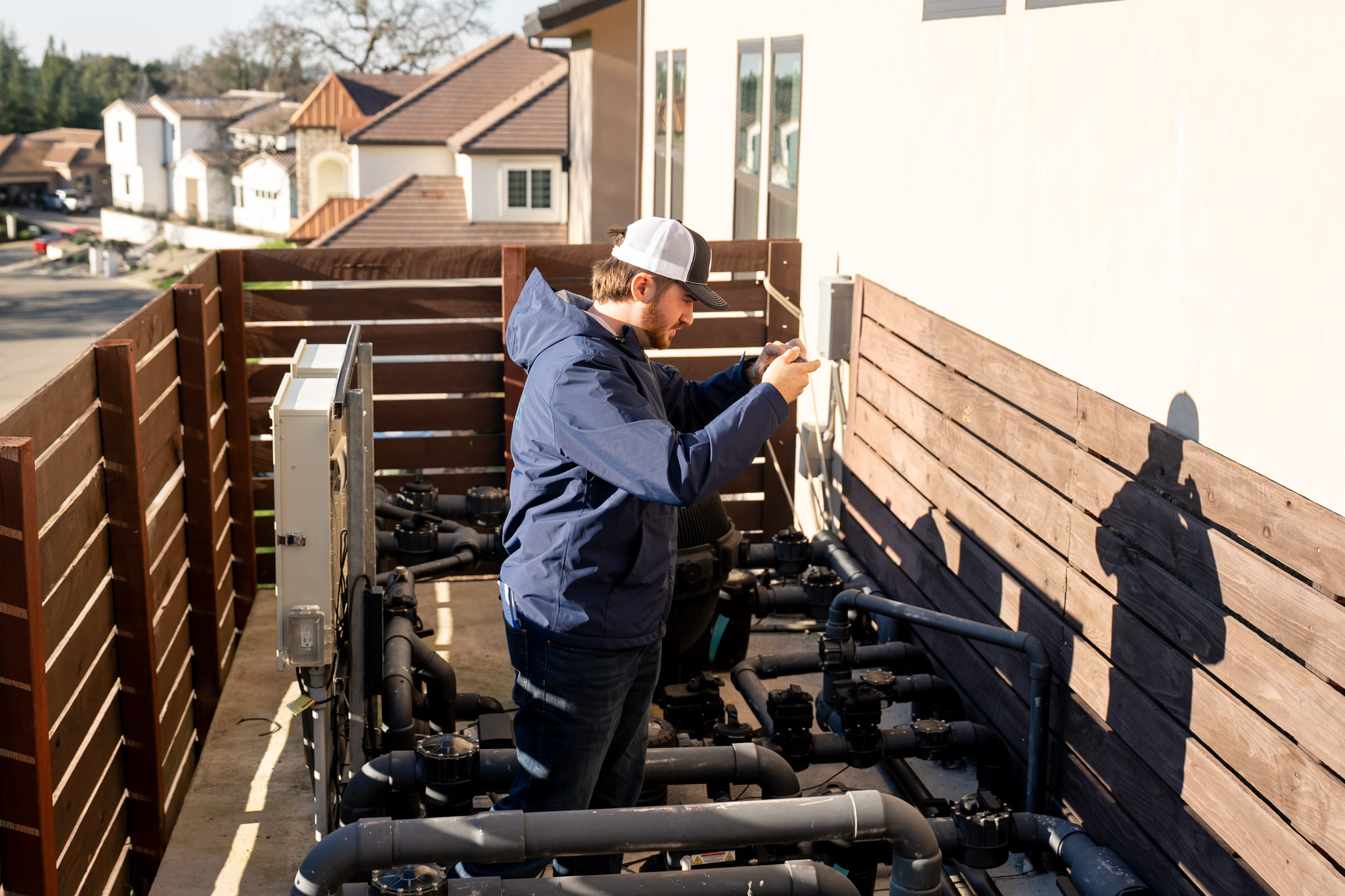
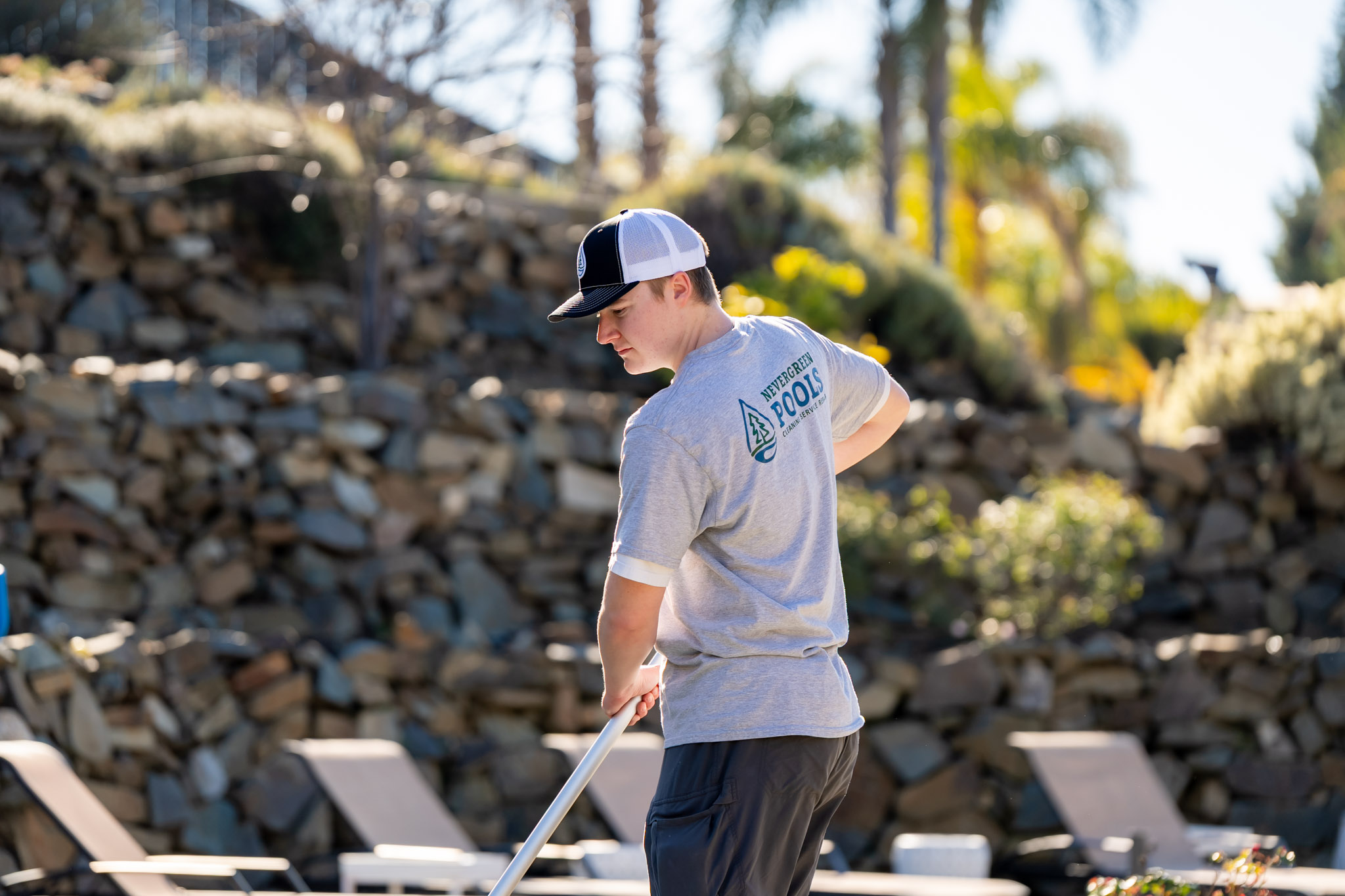
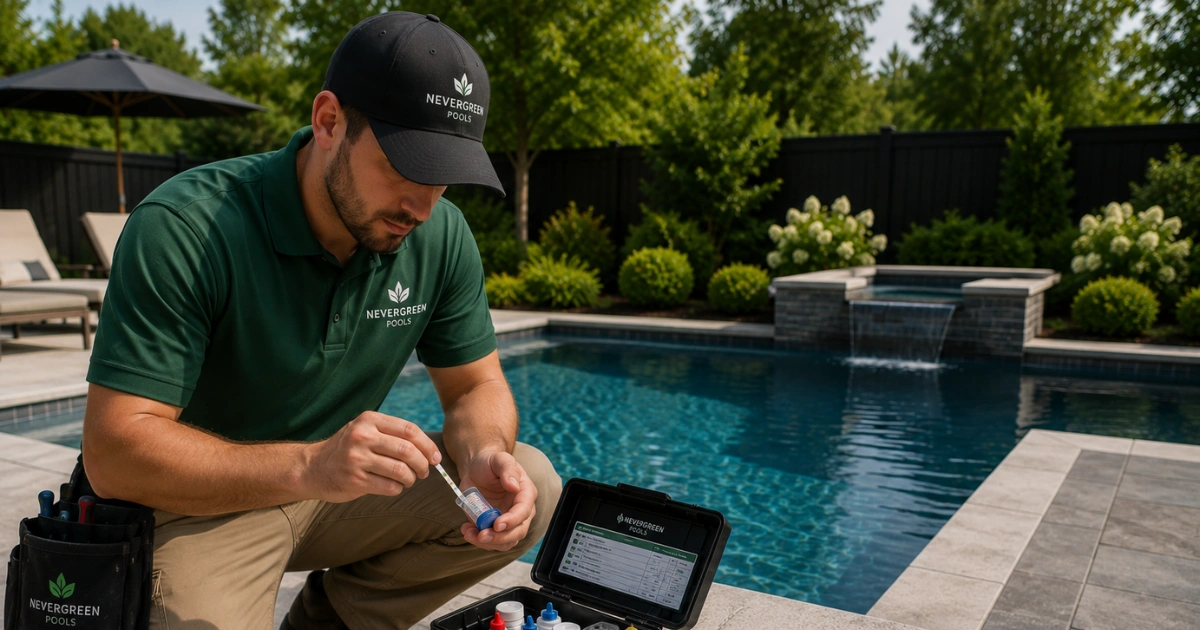
Nevergreen Pools provides pool pump repair in Shingle Springs, covering diagnosis and repair of leaking shaft seals, failing bearings, motors that won't start, lost prime, cracked pump housings, clogged impellers, and air leaks at the lid o-ring, along with motor swaps and full pump replacement when a unit is past the point of repair.
Call us if you're priming the pump by hand every morning before it will run, if there's a puddle forming under the pump housing, if the motor hums but the shaft won't turn, if the pump sucks air and loses prime a few minutes into the cycle, if the motor grinds, squeals, or has gotten louder over the past few weeks, if the pressure gauge stays low even right after the filter is cleaned, or if the basket is clear and primed but the pump still won't move water.
Nevergreen Pools is a licensed pool company serving the Sacramento region. Call to get a technician scheduled, or book your first visit online.
What We Check and Fix
A pump that won't start usually comes down to one of a few things: a bad capacitor, a seized motor bearing, or a thermal overload tripped from running dry. We pull the motor cover and test the capacitor first, since a weak or failed capacitor is the most common reason a pump hums but doesn't spin. If the bearings are gone, you'll hear it before we even open anything up, a grinding or screeching that gets worse under load and louder by the week, and at that point the motor gets replaced rather than repaired, since a worn bearing only gets worse and can take the shaft and seal with it.
Lost prime is almost always an air leak, not a worn-out pump. We start at the lid o-ring, since a dried-out, cracked, or pinched o-ring is the single most common point for air to get pulled into the system before the pump ever sees water. If the lid seals fine, we check the unions, the drain plugs, and the shaft seal behind the impeller, which leaks water out when the pump is running and pulls air in once it shuts off. A cracked pump housing, usually from a hard freeze or from an impact at the pad, gets replaced rather than patched, since a repaired crack rarely holds under suction for long. We also pull the impeller to clear debris when flow is weak but the motor sounds fine, which happens often here given how much oak and pine debris works its way past the skimmer and pump baskets over a season.
- Test the capacitor and motor windings when the pump won't start or trips the breaker
- Inspect the lid o-ring, unions, and drain plugs for the source of an air leak
- Check the shaft seal for the fine weep that turns into a steady drip
- Pull and clear the impeller when flow drops but the motor runs normally
- Inspect the housing for cracks from freeze damage or impact at the pad
- Check well water systems for iron and mineral buildup inside the pump and plumbing
On properties with well water, iron and mineral content can scale the inside of the pump housing and volute over time, which restricts flow even when the motor and seal are otherwise fine. We flag that separately from a mechanical repair, since it's a water quality issue rather than a worn part, and it can come back if the water itself isn't addressed. On exposed pads, we also check for freeze damage to the pump housing and the plumbing at the pad after a cold snap, since a hard freeze can crack a housing or split a fitting even when the rest of the equipment still looks fine from the outside.
When a motor has failed but the pump housing, impeller, and seal are still in good shape, a straight motor swap is the right call and gets the pump running again at a fraction of the cost of full replacement. When the pump is old enough that the housing is cracked, the bearings are shot, and it's still running on a single fixed speed, we replace the whole unit with a variable-speed pump instead of bolting another single-speed motor onto an old housing. That brings the electric cost down and gives you a pump quiet enough to run on a longer daily cycle, which matters on properties with long pipe runs between the pool and the pad.
A Pump You Don't Have to Think About
A properly repaired pump primes on its own, runs quiet, and holds steady pressure on the gauge day after day. You shouldn't have to prime it by hand, listen for a bearing that's getting louder, or check for a puddle under the housing before you turn it on. Ignored, a small seal weep turns into a motor that's run dry and seized, a slow air leak turns into a pump that won't hold prime at all, and a hairline crack in the housing from a winter freeze turns into a full housing failure in the middle of pool season when you need it running most. A pump that's quietly losing prime or running hot is also harder on the filter and the heater behind it, since they're only getting partial flow.
Call Nevergreen Pools to get a technician out to look at the pump, or schedule your first visit online. We'll give you a straight answer on repair versus replacement and what it costs before any work starts.
Related services in Shingle Springs: Pool Repair in Shingle Springs and Weekly Pool Service in Shingle Springs.