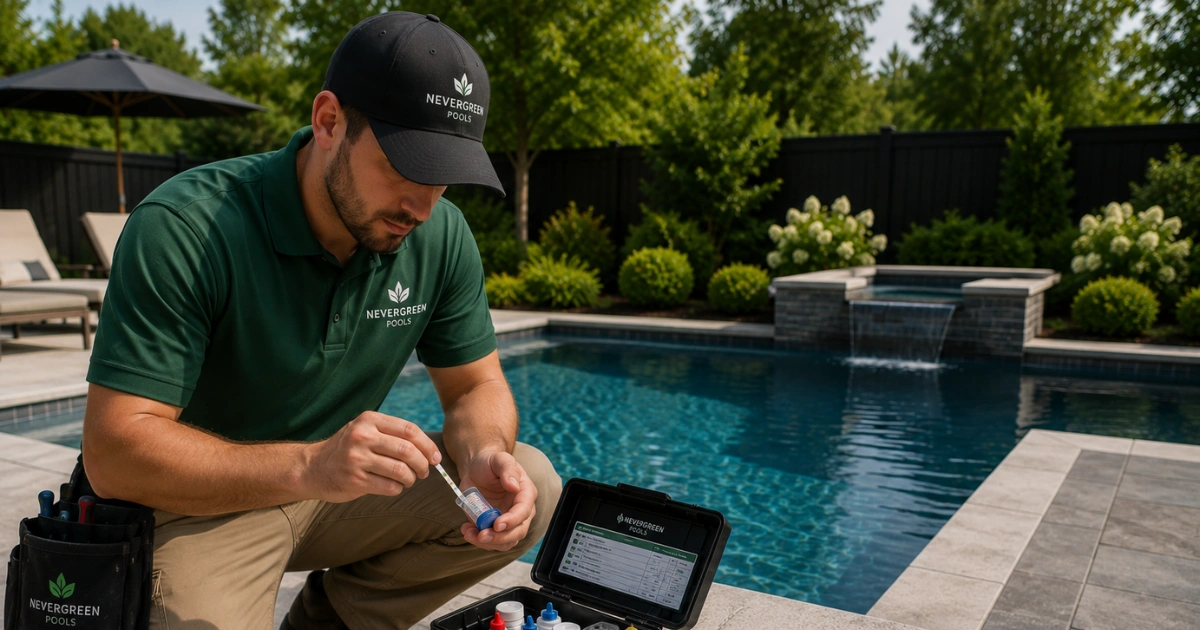
Nevergreen Pools provides pool repair in Scottsdale, covering cracked or broken skimmers and skimmer lids, broken return fittings and eyeballs, leaking unions and valves on the equipment pad, stuck or broken diverter valves and valve actuators, cracked pad plumbing, pressure problems from clogged lines or a failing valve, main drain and skimmer basket issues, and pool cleaner repairs.
Call us if a skimmer lid is cracked or missing and the basket keeps popping loose, if a return eyeball has snapped off or won't turn to aim the flow, if water is misting or dripping from a union or valve fitting on the pad, if the diverter valve won't switch cleanly between the pool and spa or won't send water to the in-floor cleaning heads, if the filter pressure keeps climbing even right after a cleaning, if the main drain cover is cracked or a skimmer basket has broken teeth, or if the pool cleaner has stopped moving or is stuck in one corner.
We serve this area in partnership with Beyond Pool Cleaning, a pool service company based nearby. Call to get a technician scheduled, or book your first visit online.
Diagnosing and Fixing the Problem
The age and type of pool and equipment shape most repair calls. Newer pools with water features, spas, and in-floor cleaning systems run on multiport or multi-way diverter valves and valve actuators that wear out from switching several times a day, and those pools are more likely to have a stuck actuator or a valve that no longer seats fully than a plumbing leak. Older plaster pools with single-speed pumps and basic multiport valves are more likely to have a cracked union, a skimmer lid that has gone brittle from years of sun, or pad plumbing that has hardened and cracked at a fitting. We start every call by identifying which of those two situations we're looking at, because it changes where we check first.
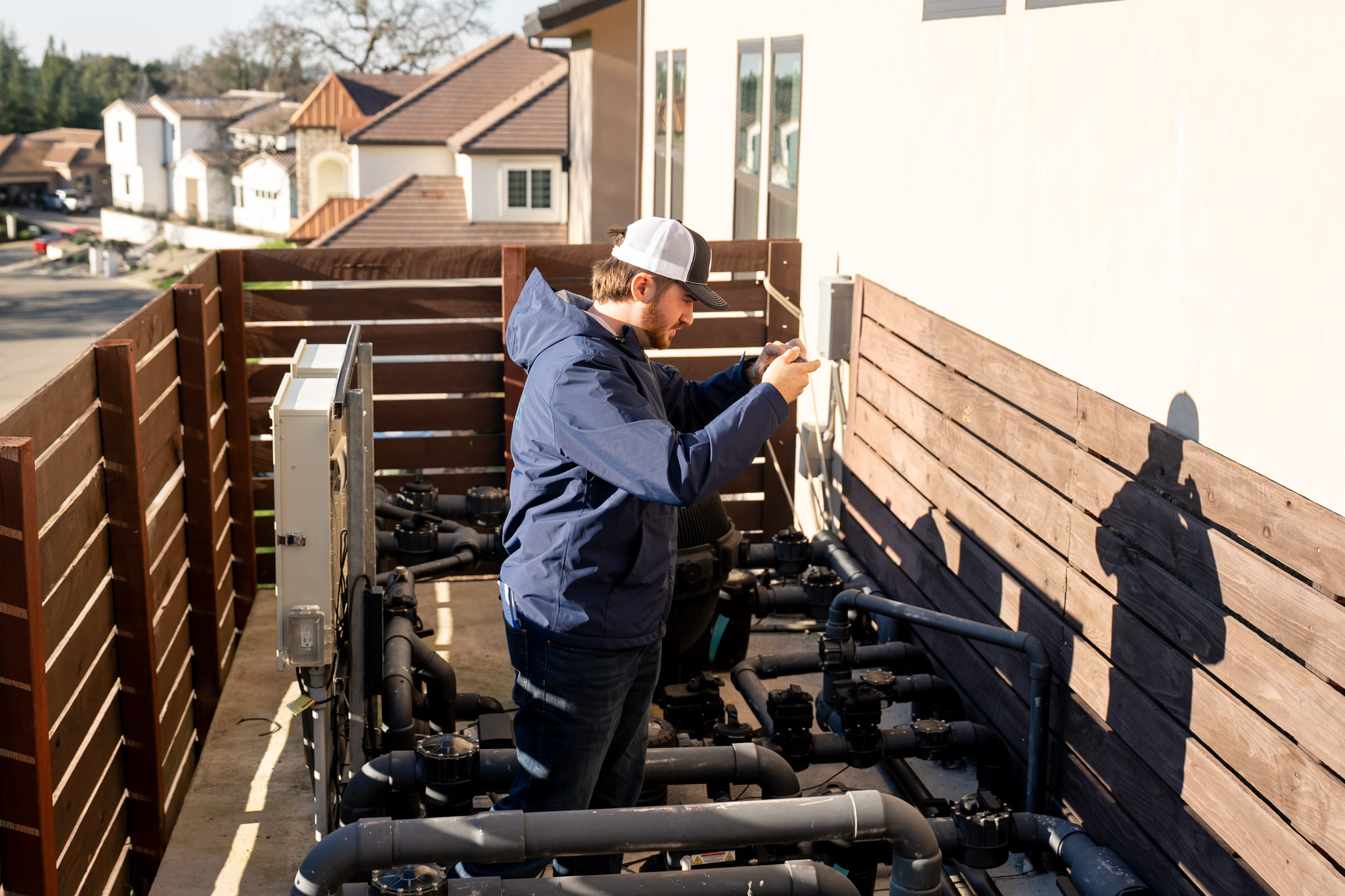
On the pad, we check every union and valve by hand for weeping or spray, since a slow leak at a union often shows up as nothing more than a damp spot until the system is under pressure. We run diverter valves and actuators through a full cycle, pool to spa and back, or through each water feature zone, to find where the valve is binding or where the actuator has lost its grip on the shaft. A valve that won't seat is usually a worn O-ring or a cracked diverter disc, both of which we can replace without pulling the whole valve body if the housing is sound. If the housing itself is cracked, that's a housing swap, not a seal repair, and we say so up front instead of patching around it.
At the pool itself, we check the skimmer and lid for cracks from UV breakdown and calcium buildup that has kept the lid from sealing, check return fittings and eyeballs for stripped threads or snapped stems, and pull the main drain cover and skimmer basket to check for broken tabs or missing pieces that let debris past the filter. Pressure problems get traced back to the source rather than just cleared at the filter, since climbing pressure with a clean filter usually points to a closed or failing valve somewhere in the line, not the filter itself. Pool cleaners get checked at the wall fitting, the hose, and the cleaner's own drive parts, since a cleaner that has stopped moving is as often a clogged leader hose or a torn diaphragm as it is a dead motor.
- Full pad inspection of unions, valves, and visible plumbing for leaks or wear
- Diverter valve and actuator test through every switching position
- Skimmer, skimmer lid, return fitting, and eyeball inspection
- Main drain cover and basket check for cracks or missing pieces
- Pressure trace from the gauge back through the valves to find the real cause
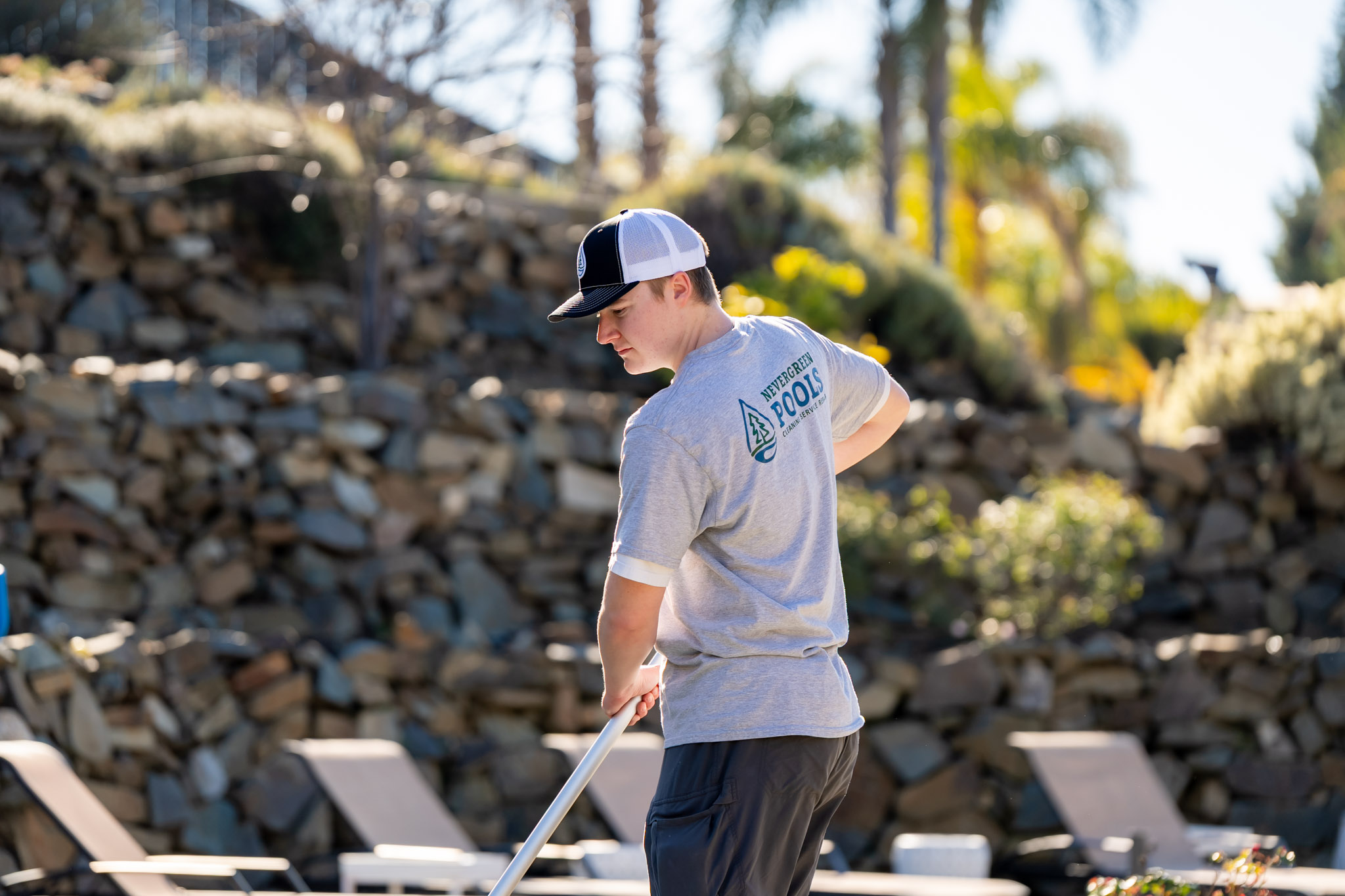
- Pool cleaner check at the wall fitting, hose, and drive components
Every repair gets a straight answer on fixing the part versus replacing it. A valve with a worn seal or a cracked eyeball fitting is a straightforward swap. A valve body that's cracked from age, or a run of pad plumbing that's hardened and brittle throughout, usually means replacing more than the one broken piece, because patching a single crack in old pipe often just moves the next failure a few inches down the line. We explain what we found and what it costs before any work starts, and we do the repair ourselves rather than handing it to a subcontractor.
What a Finished Repair Looks Like
A finished repair means the pad is dry with no weeping unions or valves, the diverter switches cleanly between every position without hesitation, the skimmer lid seals and stays in place, return fittings aim and hold, and the pool cleaner is back to covering the full floor on its normal cycle. Pressure on the gauge settles back to its normal range and stays there instead of creeping up between cleanings.
Left alone, small problems on the pad turn into bigger ones. A slow union leak wastes water every day it runs and can undercut the equipment pad slab over time. A diverter valve that's starting to stick usually fails completely within a season, at which point the spa or water feature simply stops working until it's replaced. That matters most on properties where the owner is away for months at a time, since a leak or a stuck valve can run unnoticed on a pool no one is watching, and on HOA-governed properties where a leak or an overflow at the pad can become a shared-area issue before anyone calls it in. Catching it at the repair stage is a smaller job and a smaller bill than catching it after the part fails outright.
Call to get a technician out to look at the pad, or book a repair visit online.
Related services in Scottsdale: Pool Pump Repair in Scottsdale and Automation & Control Systems in Scottsdale.