Professional Pool Service
Pump Installation & Upgrades in Modesto
Variable speed pump installation and upgrades in Modesto, CA. Title 24 sizing, speed programming, leak checks, and lower energy bills year round.
Professional Pool Service
Variable speed pump installation and upgrades in Modesto, CA. Title 24 sizing, speed programming, leak checks, and lower energy bills year round.
Modesto sits in Stanislaus County where the Tuolumne River runs out toward the valley floor, and almost every direction out of town ends in orchard rows. Almonds, walnuts, and peaches set the rhythm of the year here, and they set the rhythm of pool equipment work too. A pump that runs clean in February is pushing through pollen film by March, pulling harvest grit in August, and fighting a basket packed with leaves by November. When we plan pump installation & upgrades in Modesto, we plan around that calendar instead of treating the pool like it sits in a sealed room.
The other constant is California energy code. Title 24 requires that most replacement pool pumps above a small horsepower threshold be variable speed, so when a single speed motor finally seizes after fifteen summers, the replacement is going to be a variable speed unit. That is not a sales angle, it is the code, and it is also the better machine. A variable speed pump lets us run low and long for filtration, step up for a cleaner or a spa, and drop the noise down to something you can talk over on the patio.
Nevergreen Pools works in partnership with Vintage Pool Service, a longtime Central Valley company based on East Yosemite Avenue in Manteca, which keeps trucks and parts close enough that a pump swap in Modesto does not turn into a week of waiting on a warehouse. Between the two crews we cover Modesto and the towns around it, including Manteca and Tracy, with the same equipment lines and the same install standards.
Bloom starts in February and the orchards throw pollen for weeks. It lands on the water as a yellow film, gets skimmed into the basket, and packs a filter tighter than any leaf ever will. This is where a variable speed pump pays for itself in the first season. Slow water filters better. Running ten hours at 1,600 RPM catches more fine pollen than four hours at 3,450 RPM, because the media has time to hold small particles instead of letting them blow through. It also draws a fraction of the power, since a pump's consumption falls roughly with the cube of its speed. Cutting speed in half does not cut the bill in half, it cuts it by close to eighty percent.
Sizing comes before any of that. The most common mistake we correct on older Modesto pools is a motor that is too big for the plumbing it feeds. Many of the gunite and plaster pools in the older tree lined parts of town, out around Graceada Park and off the McHenry corridor, were built with one and a half inch suction and return lines. Put a three horsepower pump on that and you get noise, heat, cavitation, and a shorter motor life, not more flow. We measure pipe size, count returns and suction ports, add up total dynamic head, and check what the filter and the heater actually want for flow. On most residential pools in Modesto the right answer is a one to one and a half horsepower variable speed unit programmed conservatively, not the biggest box on the shelf.
Once the pump is mounted and wired, programming decides whether you like living with it. We set speeds to jobs:
Summer here runs hot from May into October, and water in the upper eighties grows algae quickly if turnover slips. We build the filtration schedule to actually turn the pool over, then verify it against the equipment rather than guessing at run times. Homeowners who move from an old single speed motor to a properly programmed variable speed almost always get a cleaner pool and a quieter yard at once, and the quiet matters more than people expect when the equipment pad sits under a bedroom window.


Almond harvest is the hardest stretch of the year on pool equipment in Modesto. When the shakers move through the orchards, dust hangs in the air for days and drifts for miles, and it is not leaf debris, it is fine grit. It passes straight through the skimmer basket, settles in the pump pot, and loads the filter fast enough that pressure climbs a few pounds inside a week. Grit is abrasive, and the part it wears is the shaft seal behind the impeller. A pump run with a packed strainer basket through harvest is a pump that starts weeping at the seal plate the following spring.
Two habits carry a new pump through those weeks. Keep the strainer basket clear so the pump is never starved, and keep the lid o-ring clean and lubricated so it seals against a dry, dusty rim. A pump that loses its seal at the lid pulls air instead of water, runs hot, and can cook a seal in an afternoon. On the variable speed side we usually raise the filtration RPM slightly during harvest and drop it back in October, which is a two minute change at the keypad.
Water source matters too. Much of Modesto is served treated Tuolumne River surface water through the Modesto Irrigation District, which is moderately soft and easy on equipment. Properties outside that service area often run hard well water, and hard water leaves calcium on impeller vanes and on the ceramic face of the shaft seal. On a hard water pool we plan for it, keep saturation balanced, and pull the impeller for a look when the basket comes out instead of waiting for flow to fall off.
Mature street trees drop hard through November, and that load reaches the pump before it reaches anything else. At install time we specify a large strainer pot with a full size basket, because a bigger basket means more days between cleanings and less chance the pump runs starved on a windy week. If the pool has an old undersized pot, replacing it during the pump swap is cheap compared to a seal failure in December.
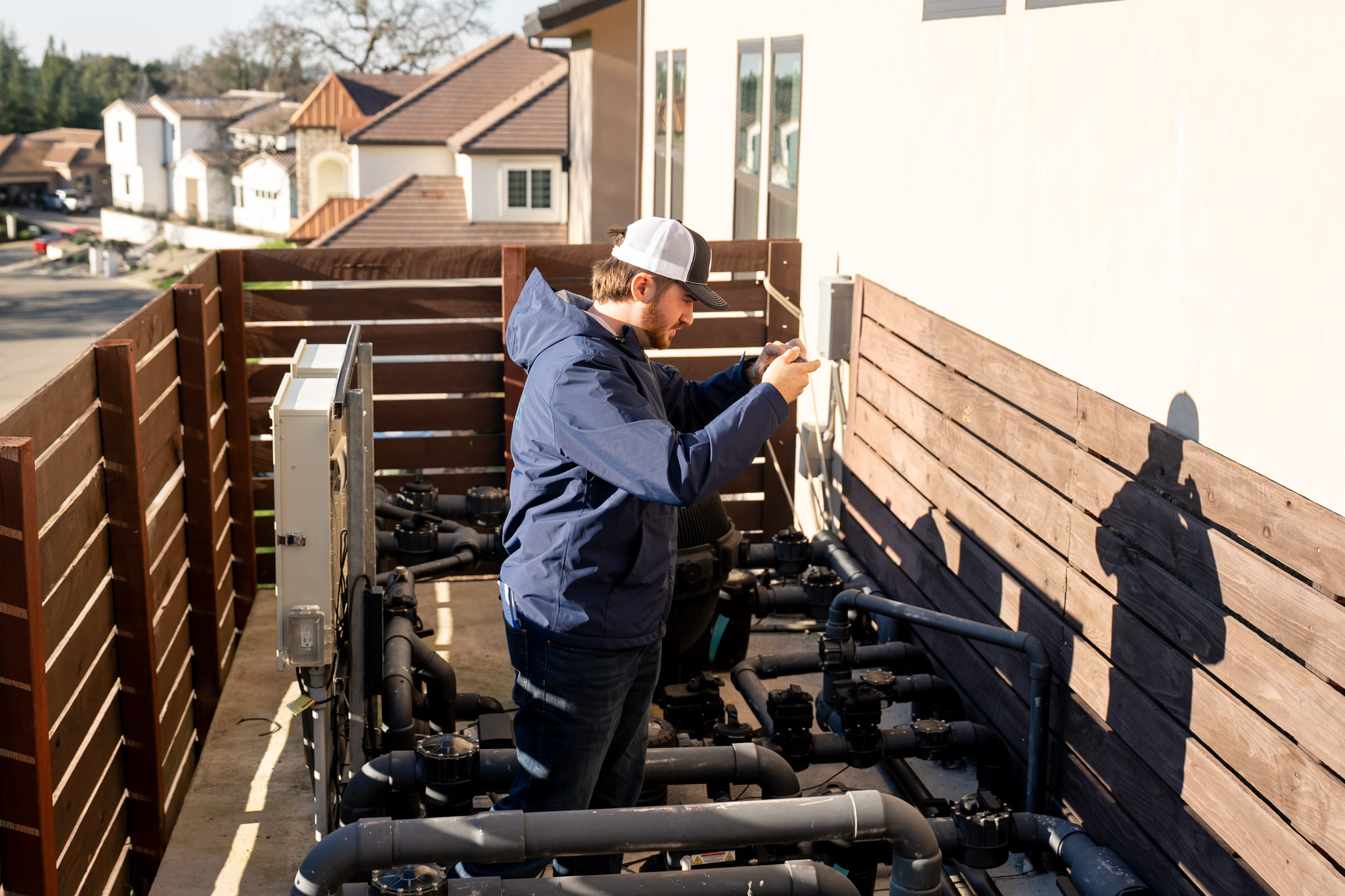
The last hour of the job is the one that determines how long the equipment lasts. We fill the pot, open the air relief on the filter, and watch the pump take prime rather than walking away from it. With water moving, we go union by union across the pad. A suction side leak does not drip on the concrete, it pulls air, so we look for bubbles in the pot and at the returns and for a water level in the pot that never fully settles. Union o-rings get cleaned and lightly lubricated and go back hand tight, not cranked with a wrench, since overtightening distorts the o-ring and creates the leak you were trying to prevent. Threaded fittings get sealant on the male threads only. We set the pump flat on the pad so the plumbing is not carrying its weight, confirm rotation and voltage for the drive, and leave the schedule written down so you know what each speed is doing.
Whether the old motor quit in the middle of an August heat run or you are planning ahead before bloom, pump installation & upgrades in Modesto go smoother when the work is scheduled around the season the pool is actually in. Winter and early spring are the easiest windows for a planned swap, since the pool is not under load and there is time to size the unit properly and program it before the pollen arrives. If the pump has already failed, we handle it as it lies, get flow back, and set the speeds correctly the same day rather than leaving it running wide open until someone comes back.
Related services in Modesto: Pool Pump Repair in Modesto and Filter Installation in Modesto.