Retrofitting an Older Pad
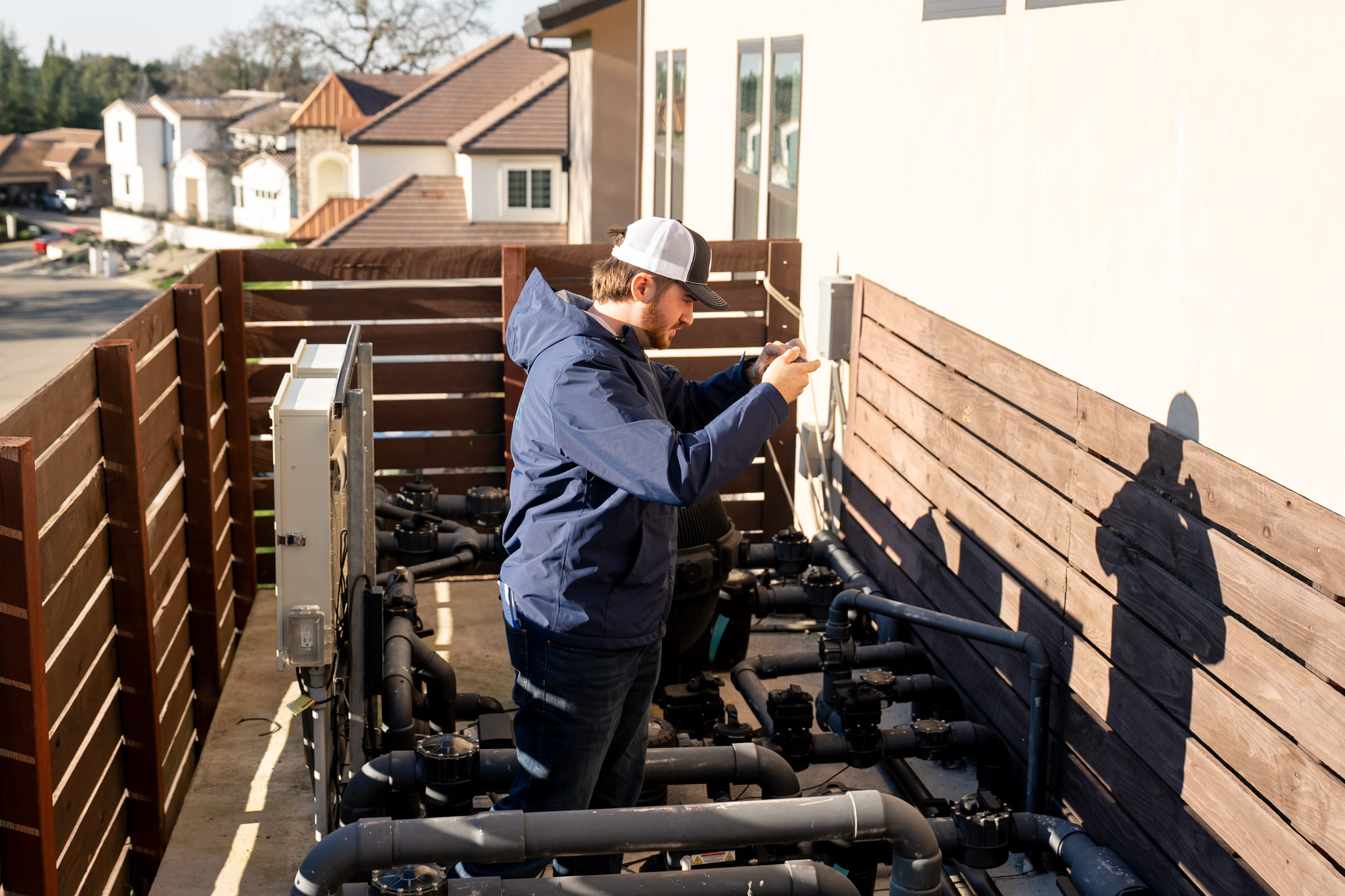
Plenty of Modesto pools still run a mechanical time clock, a single speed pump, and valves that get turned by hand. Those pads retrofit well, but the work sits in the details rather than in the controller itself. We look at the bonding grid and the panel first, since older equipment areas often have marginal grounding and no spare breaker space. Then the time clock comes out, a load center goes in, and relays get sized for the pump, heater, lights, and any booster on the pad. Older incandescent lights pull enough that they need their own relay, and color LED lights need a relay that can be pulsed for color changes without tripping the show sequence.
After that it is wiring. Actuators go on the suction and return diverters, each one gets low voltage cable back to the panel, and travel and end stops are set so a valve never stalls halfway between positions. A variable speed pump talks to the controller over an RS-485 communication cable, which is what makes true speed scheduling possible instead of plain on and off. Water temperature sensors seat in the return plumbing, the air sensor mounts out of direct sun, and the heater gets wired for fireman switch control so it shuts down and cools before the pump stops. If the pad sits far from the house, we plan the network link before install day rather than discovering a dead spot at startup, which usually means a wired run or an outdoor rated access point instead of hoping for signal through a stucco wall.
- Bonding, grounding, and available breaker space checked before anything is ordered
- Load center and relays sized to the pump, heater, lights, and cleaner
- Valve actuators set for full travel in both pool and spa modes
- RS-485 run to the variable speed pump for real speed control
- Water and air sensors placed where they read honestly
- Fireman switch wired so the heater cools down before circulation stops
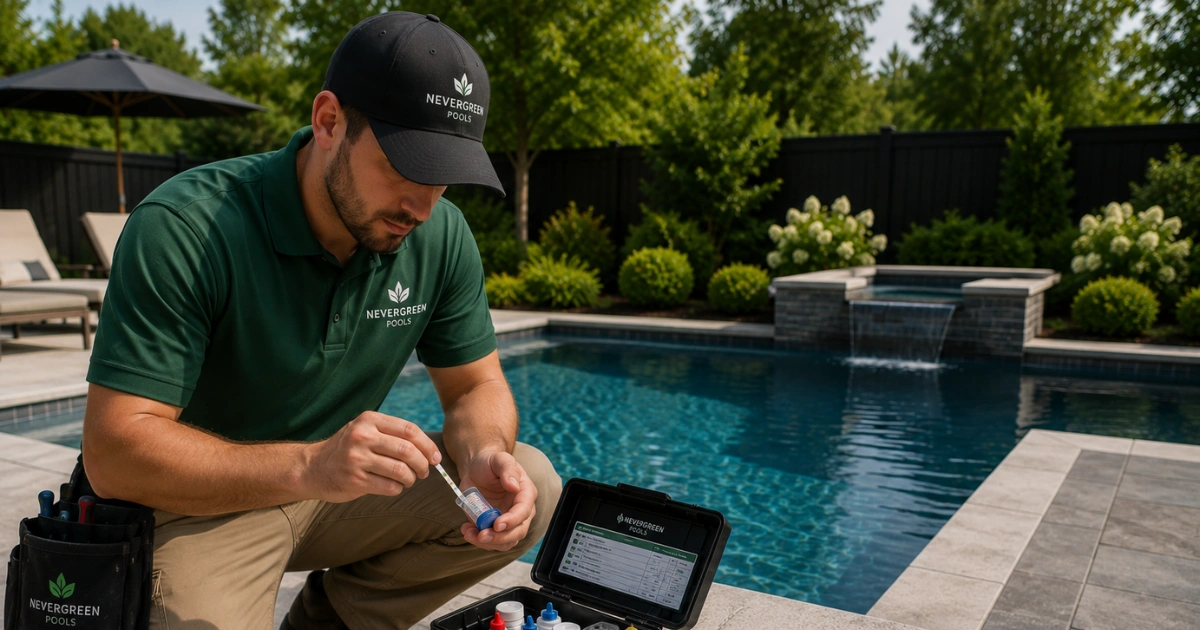
Water quality shapes the sensing side of the job. Much of Modesto runs on treated Modesto Irrigation District surface water, which is moderately soft and easy on probes and salt cells. Properties on outlying well water are harder, and scale builds on a pH probe or a cell fast enough that we set a shorter calibration interval and go over it at handover. pH and ORP sensing is worth having either way, because it lets the controller dose acid and sanitizer against a live reading instead of a fixed rate that is wrong half the year. On a salt pool we also tie cell output to pump speed, so the cell is not being asked to produce while the pump is loafing at low speed and flow is marginal.
Commissioning and Handover
Startup is where an install proves out. We power each circuit one at a time and confirm the relay, the label at the panel, and the tile in the app all agree, because a mislabeled relay is the most common thing we find on automation somebody else installed. Valves cycle through full travel in every mode, spa included, and we watch for a diverter fighting the plumbing. Heater setpoints and lockouts go in, freeze protection is triggered on purpose to confirm the pumps start, and pump speeds are dialed against actual flow and skimmer behavior rather than a number off a chart. We record clean filter pressure at each programmed speed so there is a baseline to compare against when the filter starts loading in August.
The last part of the visit is with the homeowner. We add the account, pair the app, and walk through what people actually do, which is heating the spa, running lights at night, adding a cleaner cycle, and overriding a schedule for a weekend without breaking it permanently. We leave a written record of relay assignments, pump speeds, and sensor locations at the pad. Good automation & control systems in Modesto earn their keep over years, and the next tech who opens that panel should be able to read the setup in about a minute.
Related services in Modesto: Automation Troubleshooting in Modesto and Sanitizer Systems in Modesto.