What the install day looks like
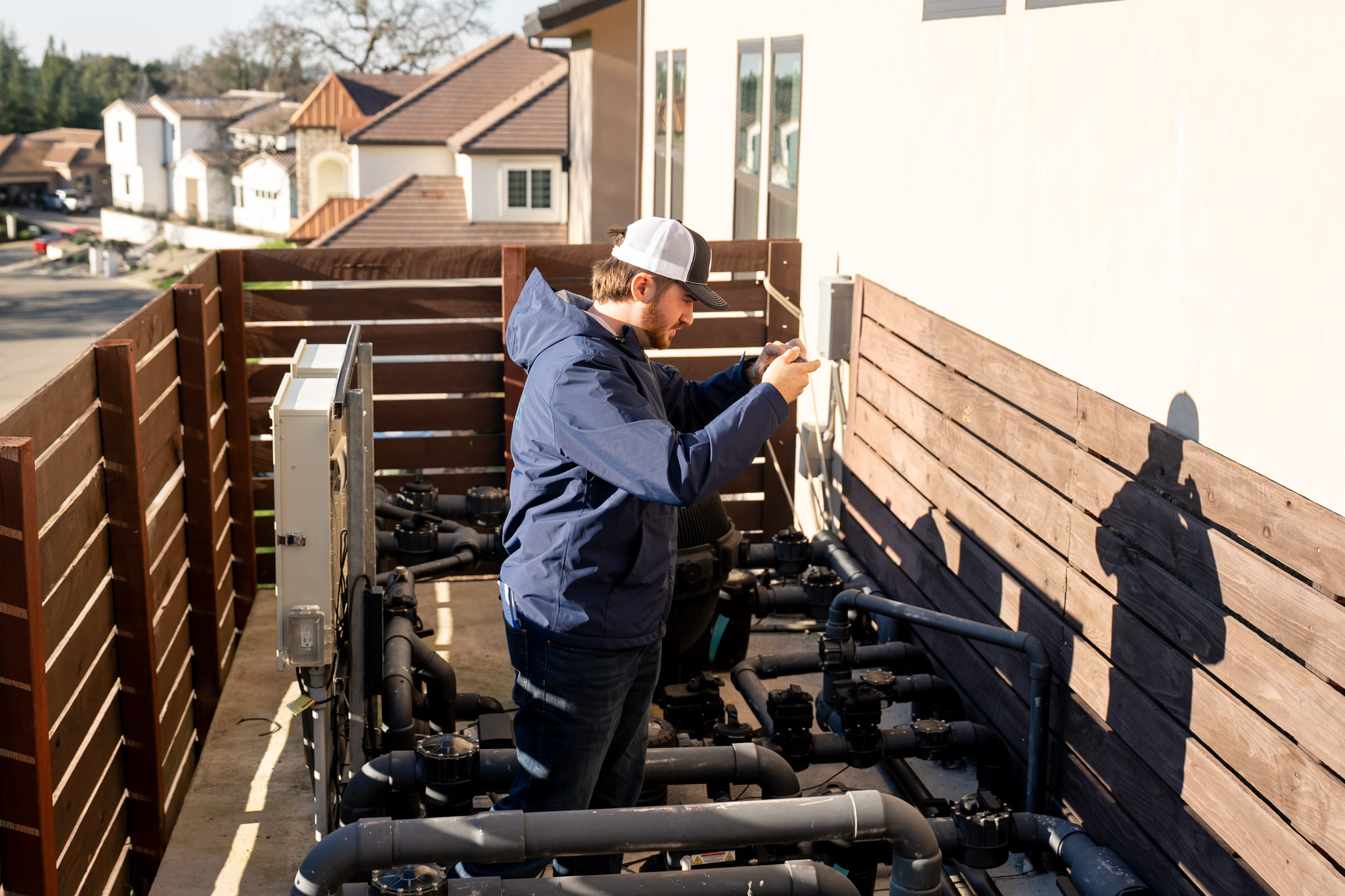
The plumbing order on the pad is not flexible. Sanitizer equipment goes in last, after the filter and after the heater. Filter first, so debris is not being pushed through a cell or across a quartz sleeve. Heater before the sanitizer, so concentrated chlorine or ozone is not sitting against the heat exchanger, which is the fastest way to eat copper. A cell or a UV housing plumbed upstream of a heater will shorten that heater's life, and we still find it done that way on pools that were put together in a hurry.
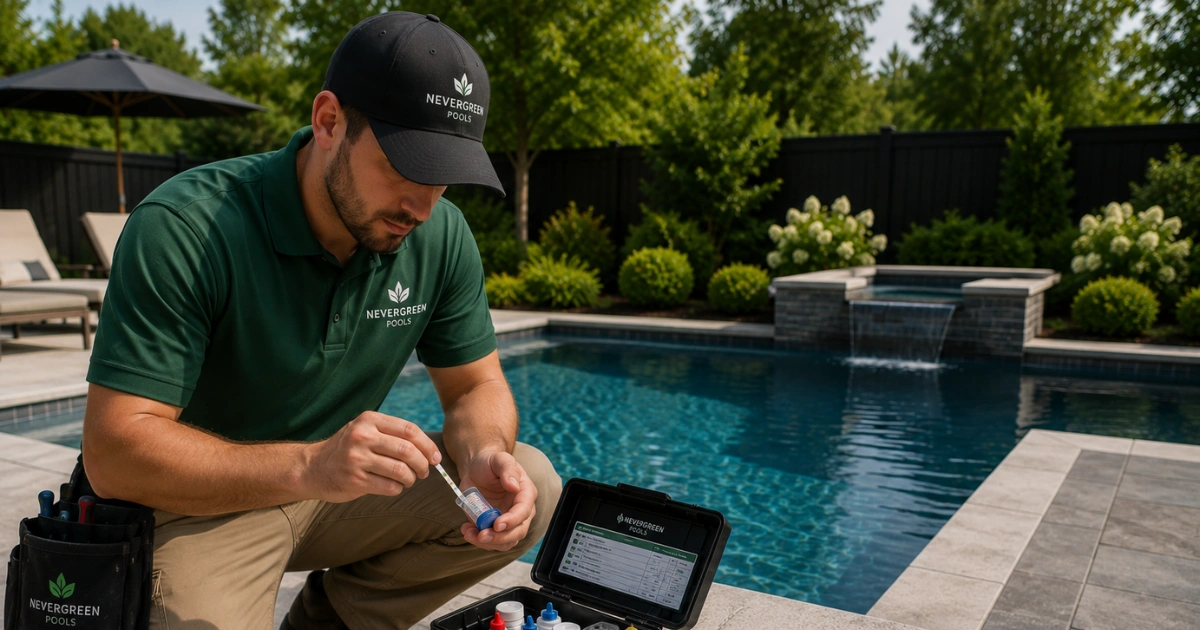
The visit itself starts with a water test and a walk of the whole pad, including pump speeds and run times, because that dictates what can go in. Then we cut in the new equipment, set unions so the cell or lamp housing can come out for cleaning without cutting pipe again, mount and bond the power supply, and add a flow switch where the unit calls for one. Bonding matters here. Salt accelerates galvanic corrosion on a pool that is not bonded correctly. Most Tracy pools built in the last twenty years are fine, but we verify rather than assume.
Solvent welded joints need cure time, so the pump stays off for a few hours after the cuts. After that we run the system, check every joint for leaks, balance the water, set the output, and if you have automation we put the sanitizer on the controller so you can read it from your phone instead of walking out to the pad. If nobody is home during the day, that is the normal way we run these jobs. We work while you are over the pass, send photos of the finished equipment, and leave the settings written down.
Wind, hard water, and what upkeep looks like
Tracy's daily dust means the load on a sanitizer never really lets up in summer. Keep the skimmer basket clear and run the pump through the windy part of the evening rather than only overnight, so the oxidizer sees the debris on the way in instead of after it has settled and started breaking down. Hard water is the other constant. Scale on a salt cell plate or a UV sleeve cuts output without any warning light, and the water starts sliding before anyone notices, so we set a cleaning interval based on your actual fill water instead of a generic calendar.
Plan on a UV lamp about once a year, a salt cell somewhere in the three to seven year range depending on runtime and water balance, and feeder seals and check valves as they wear. Those are consumables, not failures. Owners who replace them on schedule are the ones who get the low chemical demand and the clean smelling water the equipment was bought for. That is the whole point of putting in sanitizer systems (UV & chlorination) in Tracy, and it is what we set every pool up to do.
Related services in Tracy: Salt Cell Replacement in Tracy and Chlorinators & Feeders in Tracy.