The Older Tract Pool and the Newer Pool
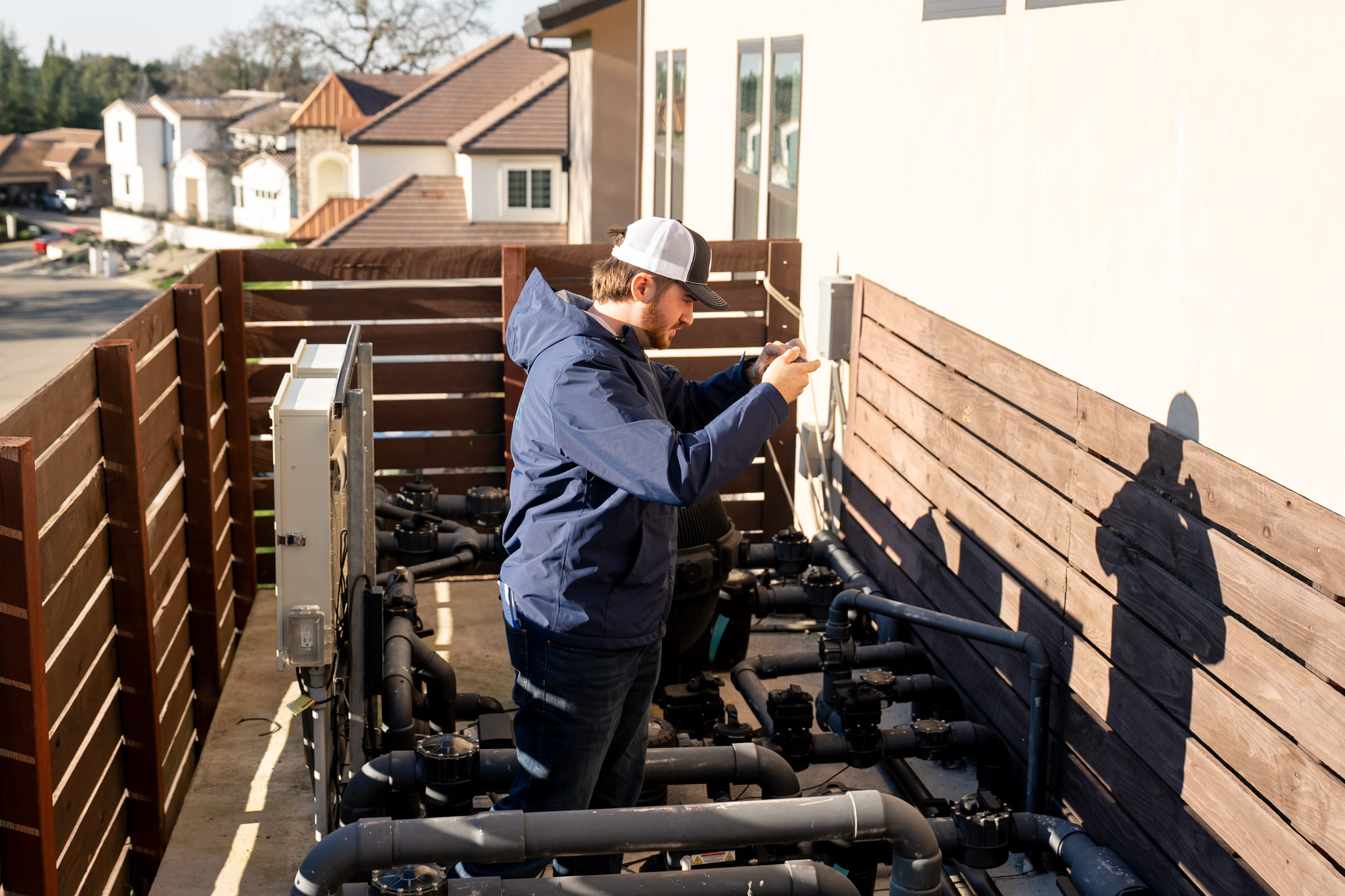
On a mid-century pool in the older parts of Stockton, the heater itself is rarely the hard part of heater & heat pump installation in Stockton. The gas supply is. Many of these houses were plumbed with a half inch line running out to a pad that only ever fed a small heater, and a modern 400,000 BTU unit needs considerably more gas than that line will pass over the distance involved. Gas line sizing is a function of BTU load, pipe length from the meter, and how many other appliances share the run. When the numbers do not work, the options are a larger line, a meter upgrade through the utility, or a smaller heater matched to what the existing line can truly deliver. We run that calculation before quoting, not after.
The water plumbing on those older pools deserves the same scrutiny. Original galvanized pipe in the ground has usually given up a meaningful share of its inside diameter to scale by now, and hard Stockton groundwater speeds that along. A heater needs adequate flow to fire safely and to keep from short cycling on the pressure switch, so a scaled or undersized supply line shows up later as a heater that trips out and a homeowner convinced the new equipment is defective. We check flow at the pad first, and when the pipe is the problem we say so rather than bolting good equipment onto a bad system.
Newer pools in the master-planned parts of the city raise a different set of questions. The plumbing and pad layout are usually sound. What matters there is the electrical side and the controls. A heat pump needs a dedicated circuit at the correct amperage and a disconnect within sight of the unit, and while newer panels generally have capacity, they are already carrying a variable-speed pump, a salt cell, and often an automation panel. We confirm the load calculation instead of assuming it. On the control side, a heater added to an existing automation system has to be wired and configured so the system both fires the heater and holds pump speed high enough to satisfy flow, which is a common miss when a heater goes in without anyone touching the controller.
Installation Details That Decide Whether It Lasts
Gas heaters need real clearance. Combustible material, overhangs, fences, and neighboring equipment all factor into where the unit can sit, and the vent has to terminate clear of windows, doors, and air intakes. Exhaust that recirculates back into the heater kills it slowly through condensation and corrosion. On the tight side yards common on Stockton lots of every vintage, that clearance requirement often dictates the entire pad layout, and it is better to solve it on paper than with a heater already sitting on the slab.
Every heater we install gets a bypass, so the unit can be isolated for service without shutting down filtration and so full flow does not have to push through the heat exchanger when the heater is off. On hard water we also have the chemistry conversation up front. Scale plating out inside a copper heat exchanger is the most common reason heaters in this part of the valley die early, and calcium is a genuine issue across much of Stockton and the towns around it, from Lodi down through Tracy. Balanced water is part of protecting the equipment, not a separate subject.
The last piece is winter. Pools here sit unused and largely unattended for months under the fog, and a heater that has not run since October is where the surprises hide, from rodents in the burner tray to a corroded pilot assembly. We set new installations up so the seasonal shutdown and the spring startup are simple, and we walk the homeowner through what to check before the first cold morning they decide they want warm water.
Related services in Stockton: Pool Heater Repair in Stockton and Automation & Control Systems in Stockton.