Nevergreen Pools provides pool pump repair in Tempe, covering shaft seal leaks, noisy or failing bearings, motors that won't start, pumps that lose prime, cracked pump housings, clogged impellers, and air leaks at the lid o-ring. Most of these calls come in late spring, when pumps that ran light through a mild winter suddenly have to push much harder against rising evaporation and longer filtration cycles, and seals or capacitors that were already weak finally fail under the added load.
Call us if the pump hums but won't start, if it's grinding or squealing when it kicks on, if water is dripping steadily from the seal plate behind the motor, if the pump loses prime and has to be primed again after every restart, if the housing has a hairline crack weeping water onto the pad, if flow at the equipment pad has dropped even though the filter is clean, or if the pump is cycling on and off on its own.
We serve Tempe in partnership with Beyond Pool Cleaning, a pool service company based nearby. Call to get a technician scheduled, or book your first visit online.
How We Diagnose and Fix Pump Problems
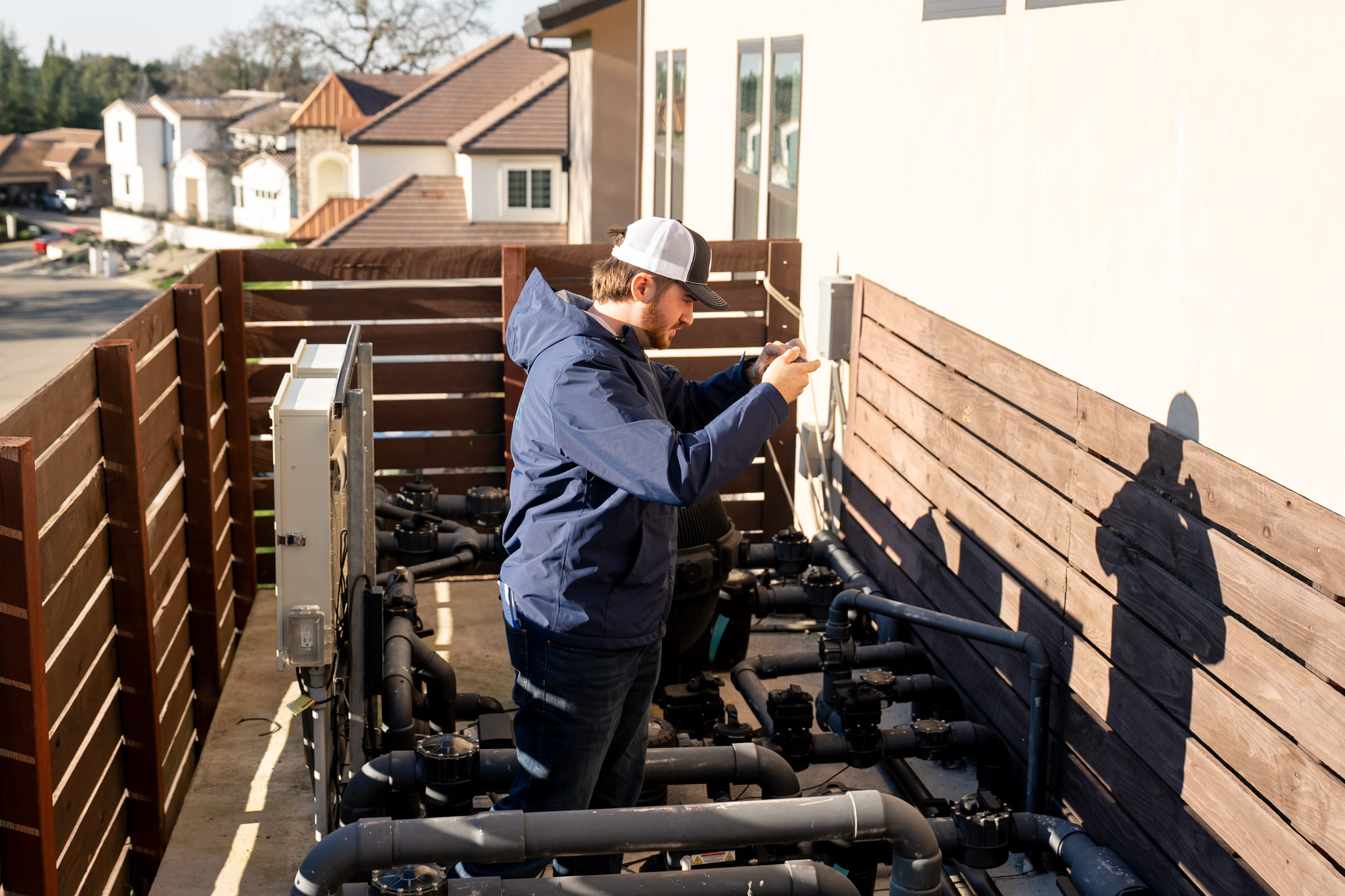
We start at the equipment pad and watch the pump run under real load rather than just listening to it idle. A lot of pools in this part of Tempe are on original plumbing from the 1960s through the 1980s, with plaster shells that have been replastered once or twice and skimmers and main drains that are original to the house, so we check those connections for the air leaks that show up as fine bubbles at the return lines or a hissing sound at the pump lid. A cracked or worn o-ring at the strainer lid is one of the most common reasons a pump loses prime, and it's an easy fix once we've confirmed that's the source instead of a suction side leak further down the line.
If the motor hums but won't spin, we test the start capacitor first, since a weak or blown capacitor is the most common reason a single speed motor won't start even though it's still drawing power. Grinding or squealing at startup usually means the bearings are worn, and once a bearing starts singing it's close to seizing, which then takes the motor with it. A steady drip from the seal plate behind the motor means the shaft seal has failed and is letting water past the shaft into the motor housing, and it gets replaced before that water reaches the windings. A hairline crack in the pump housing itself, usually from age or vibration over the years, gets a housing replacement rather than a patch, since a patched housing tends to crack again once the pump is back under pressure. A clogged impeller, often from a chunk of debris that made it past the basket during a busy week, shows up as low flow and a pump that runs hot, and it's a straightforward pull and clear once we've got the housing open.
We check every repair against these points before we call it done:
- Test the start and run capacitors under load, not just for a charge
- Check the shaft seal and seal plate for drips or weeping
- Inspect bearings for grinding, squealing, or play in the shaft
- Pressure test the lid o-ring and suction fittings for air leaks
- Pull and clear the impeller if flow is low despite a clean filter
- Check pump sizing against the filter and pipe before swapping it in
A motor swap makes sense when the housing, impeller, and wiring are all in good shape and only the motor has failed, since the rest of the pump still has useful life left in it. Once the housing is cracked, the impeller is worn, or the pump is original equipment running alongside a sand or DE filter that's past its working life, we replace the whole pump instead of chasing one part at a time. Any full replacement goes in as a variable speed pump, sized to the pool's actual plumbing rather than swapped one for one, since running an old single speed pump around the clock in summer heat costs more in electricity within a year or two than the difference in equipment price.
What a Working Pump Gets You
A pump that's running right gives you steady flow through the filter, even turnover, and a pool that holds its chlorine level instead of clouding up every time the heat spikes. It also means the equipment pad stays dry, since a sound shaft seal and housing don't leak onto the pad or into the electrical connections nearby.
Left alone, a small problem gets expensive fast. A seal that's dripping slowly keeps dripping until it reaches the motor windings and takes the whole motor with it. Bearings that are already grinding usually seize within weeks, not months, especially running daily through a Tempe summer. A pump that's lost prime and runs dry, even briefly, burns out a seal that was otherwise fine. And a pool that isn't circulating and filtering properly in July or August turns cloudy or green within days, especially after a monsoon storm dumps dust into the water overnight.
Call to get a technician out, or schedule your first visit online.
Related services in Tempe: Pool Repair in Tempe and Weekly Pool Service in Tempe.