Nevergreen Pools handles pool repair in Phoenix, covering cracked or broken skimmers and skimmer lids, broken return fittings and eyeballs, leaking unions and valves at the equipment pad, stuck or broken diverter valves and actuators, cracked pad plumbing, main drain and skimmer basket issues, and pool cleaner repairs.
Call us if a return jet is trickling water while the others still spray full flow, if the skimmer lid is cracked or missing and leaves are going straight into the pump basket, if you can see or hear water weeping from a union or valve at the pad, if the spa or waterfall valve won't divert flow the way it used to, if filter pressure keeps climbing right after a cleaning, if the pool cleaner has stalled out or stopped moving across the floor, or if a skimmer or main drain basket is cracked and letting debris past it into the pump.
We serve Phoenix in partnership with Beyond Pool Cleaning, a pool service company based nearby. Call to get a technician out, or book your first repair visit online.
What We Check and Fix
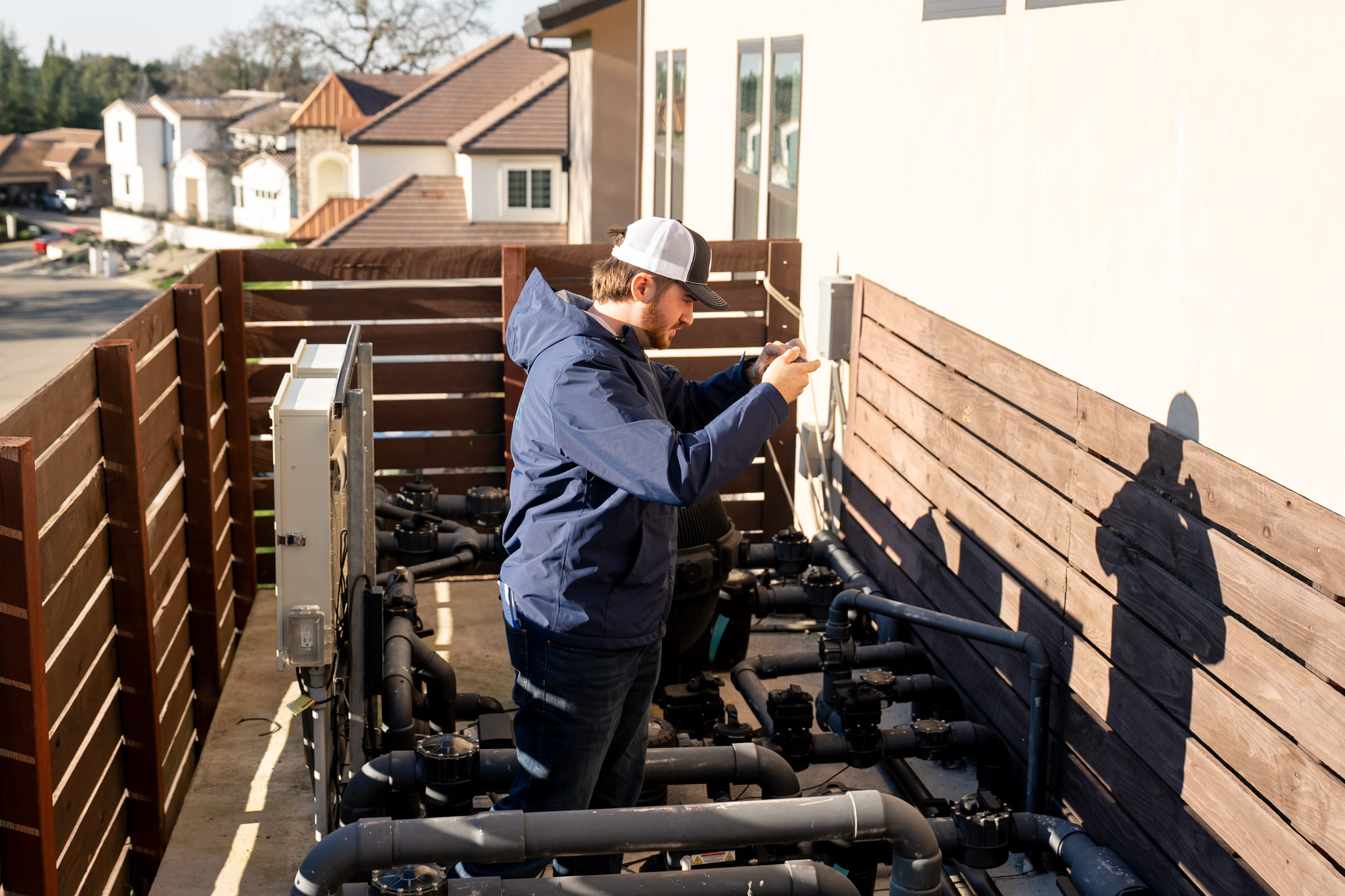
Every repair call starts at the equipment pad. We trace the plumbing run, pressure test the suspect line if a leak isn't visible, and check every union and valve by hand, since a union that looks tight can still be weeping at the O-ring. A cracked skimmer body or a broken lid gets replaced rather than glued, because a patched skimmer usually cracks again at the same spot within a season, especially with the temperature swings this area sees between summer and winter. Broken return fittings and eyeballs are straightforward swaps, but we check the fitting threads first, since stripped threads on an old fitting mean the whole fitting has to come out rather than just the eyeball.
Diverter valves and valve actuators fail two ways here: the gears inside an actuator strip from age, or the valve body itself cracks from scale buildup restricting how far it can turn. We open the actuator first, since that's the cheaper fix, and only replace the valve body if it's actually cracked or the seat is too worn to seal. Cracked pad plumbing gets cut out and re-glued with new PVC rather than wrapped or clamped, since a wrap is a temporary fix that fails again under pressure. If a filter's pressure keeps climbing regardless of cleaning, we check for a closed or partly closed valve upstream before assuming the filter media is the problem.
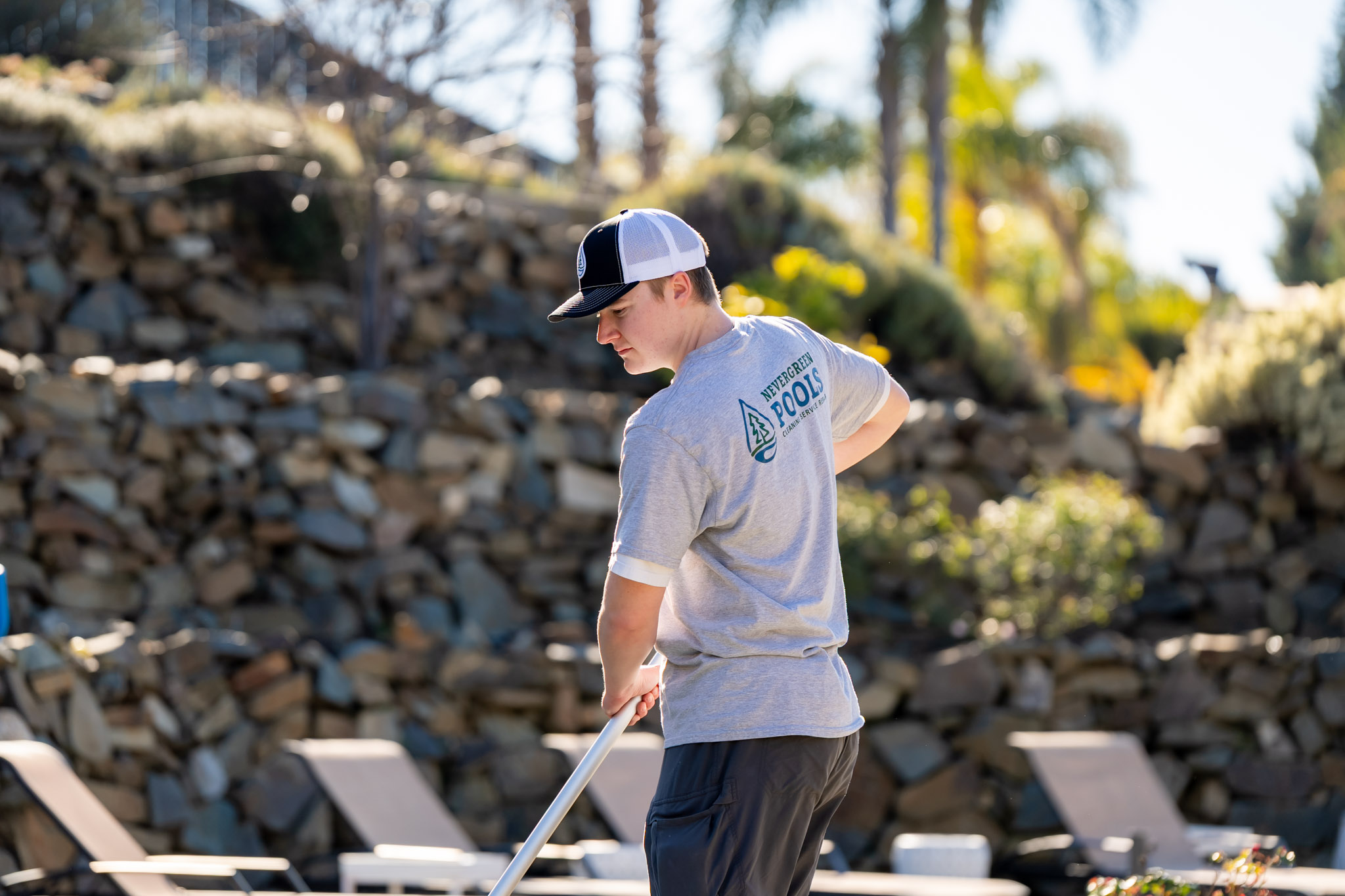
Main drain and skimmer basket problems are usually simple, a cracked basket lets debris through into the pump strainer, and a warped or missing lid does the same at the main drain. We replace baskets and lids as a matter of course rather than leaving a cracked one in place, since a basket that's already brittle from UV exposure won't survive another season. Pool cleaner repairs follow the same logic: a cleaner that has stopped moving is usually a worn drive belt, a clogged turbine, or a torn diaphragm, and we open it up on site rather than sending it out, so most cleaner repairs are done before we leave.
- Trace and pressure test pad plumbing to isolate the leak
- Inspect and replace cracked skimmers, skimmer lids, and skimmer or main drain baskets
- Replace worn return fittings and eyeballs, checking fitting threads first
- Repair or replace diverter valves and valve actuators
- Cut out and re-glue cracked pad plumbing rather than patching it
- Diagnose pressure problems at the valves before replacing filter media
- Repair pool cleaners that have stopped moving or lost suction
Repair or Replace
Not every worn part gets swapped automatically. A union with a bad O-ring or a valve with a worn seat is a straightforward repair, and there's no reason to replace the whole assembly around it. A pad plumbing crack from age or a UV-brittle fitting is also a repair, not a rebuild, unless the surrounding pipe is degraded enough that cutting one section just moves the problem down the line. Hard water here leaves calcium scale inside valves and actuators, and scale is the reason a valve that turned freely a year ago now binds or won't seat fully, so we factor scale into the repair, not just the visible crack.
Replacement makes sense when a part has already failed once and the fix is temporary by nature, or when the cost of repeated repairs on an old component starts to add up faster than one replacement would. A skimmer with a second crack after a prior patch, a valve actuator with stripped gears, or a pool cleaner with a cracked housing usually gets replaced rather than repaired again. We explain which category a repair falls into before we do the work, so the decision is based on the part's actual condition, not a guess.
What You Get Back
A repaired pad means steady pressure at the gauge, full flow to every return, and no water disappearing anywhere it shouldn't. A cracked skimmer or a leaking union rarely stays a small problem. A slow leak wastes water every day it runs and can undermine the deck or the pad slab over time, and a stuck diverter valve forces the pump to work against resistance it wasn't built for, which shortens the motor's life. Catching these early is cheaper than replacing a pump or repouring a section of deck later.
Call to get a technician scheduled, or book your first repair visit online.
Related services in Phoenix: Pool Pump Repair in Phoenix and Automation & Control Systems in Phoenix.