A pool in Modesto does not sit still through the year. Almond, walnut, and peach orchards ring the city, and what comes off those trees ends up in the water. Bloom dust in late winter, shaker dust through the almond harvest in August and September, and then a long leaf drop from the mature street trees that shade the older parts of town. A start-up is not one fixed procedure you run the same way every time. It is a sequence you adjust based on what the pool has been sitting through since the last time somebody worked on it.
Nevergreen Pools handles pool start-up service in Modesto in partnership with Vintage Pool Service, a longtime Central Valley company running routes out of East Yosemite Avenue in Manteca. Local knowledge matters here because the water is not one thing. Much of Modesto is on treated Tuolumne River water from the Modesto Irrigation District, which is fairly soft and behaves predictably when you are building chemistry from scratch. Move out toward the county edges and you are on well water hard enough to change how you dose calcium and how fast you can push saturation into range.
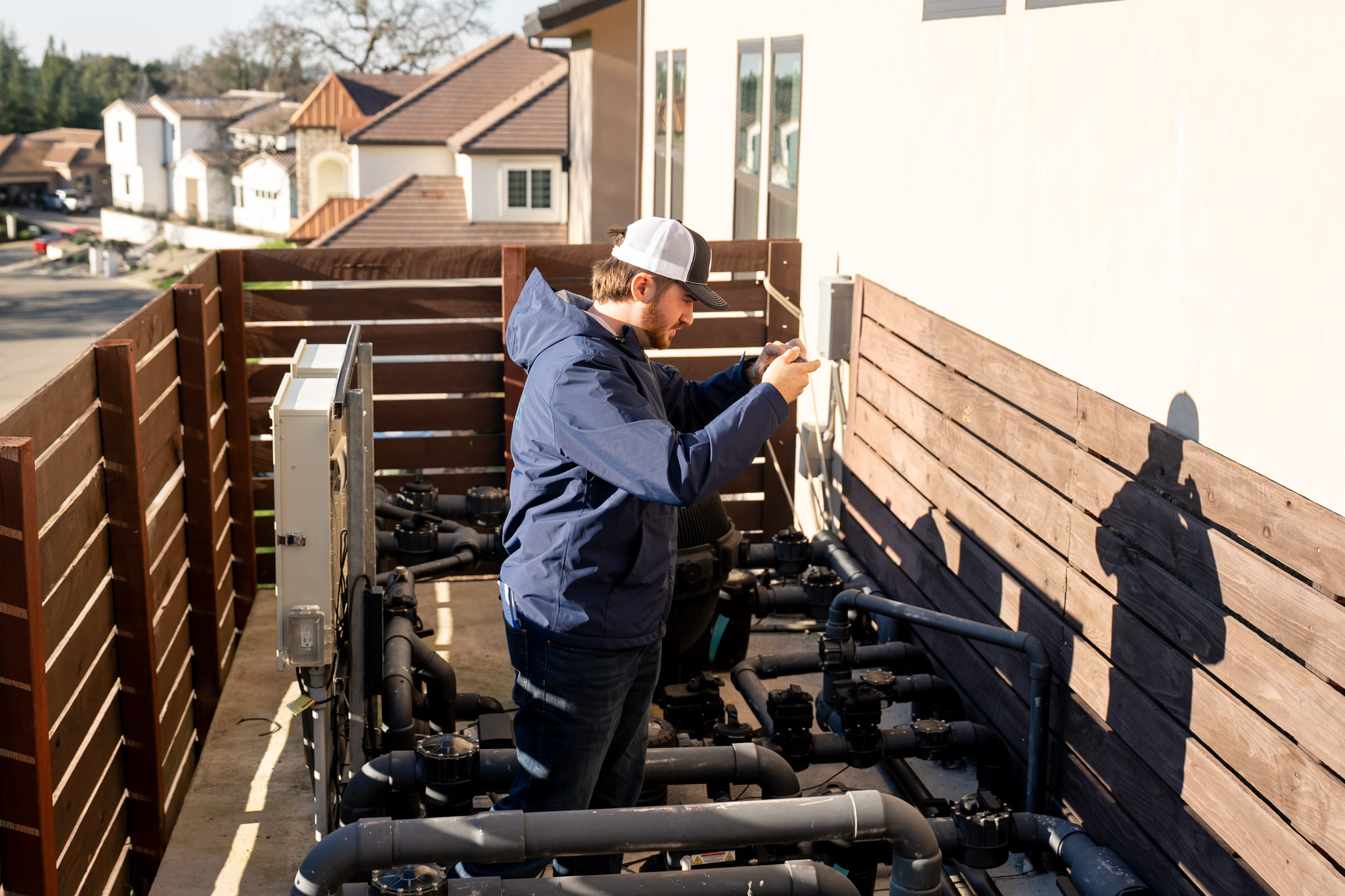
The job is mechanical before it is chemical. Equipment inspection, debris removal, filter clean, circulation restarted and watched under load, then a full water test and staged correction spread across days instead of one dump of chemicals. Older gunite and plaster pools near Graceada Park and along the McHenry corridor need a different eye than the newer builds going in around the edges of town, and a freshly plastered surface follows start-up rules that have nothing to do with seasonal opening at all.
Spring Start-Ups and the Orchard Bloom
February through April is the busiest window of the year. The pool has been covered or ignored since fall, the water is cold, and cold water hides trouble. Algae sitting dormant at 55 degrees will bloom the same week the air hits 80. So the first thing that gets checked is equipment, not chemistry. Pump lid o-ring, shaft seal, suction side for air leaks, filter housing and clamp band, the heater if there is one, valve actuators, and the timer or controller that has been sitting through months of tule fog and damp. A pump that has not turned over since October frequently needs a seal before it needs anything else, and finding that on day one is better than finding it after the water is balanced.
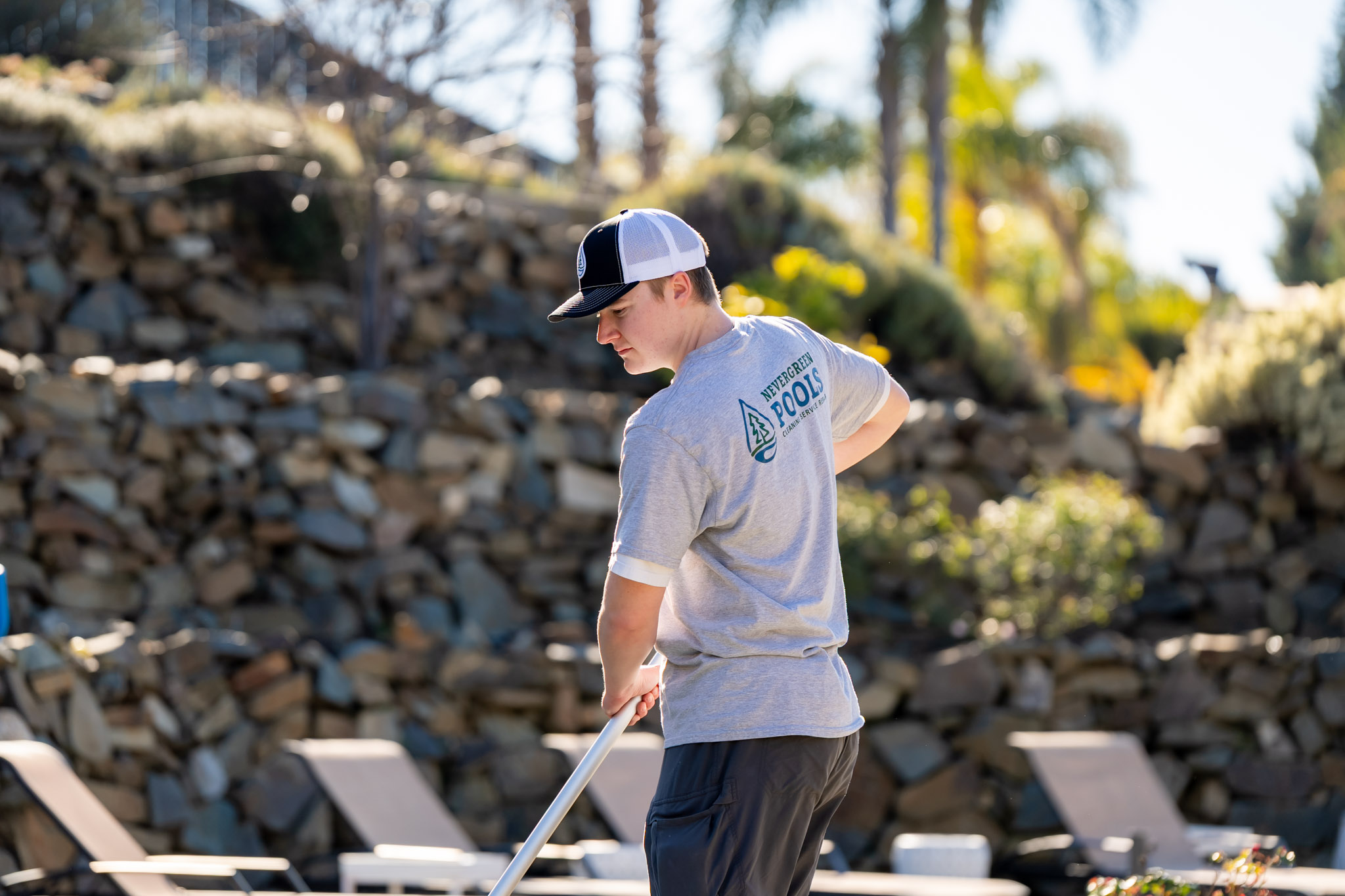
Then the debris comes out. In Modesto that means a heavy layer of orchard bloom fines mixed with whatever the winter storms blew in. Those fines are small enough to slip past a leaf net and load a cartridge or a set of DE grids quickly, so the filter gets pulled and cleaned before circulation restarts rather than a week later. Running dirty media through a start-up only means doing the same work twice. Skimmer baskets, pump basket, and the main drain get cleared, the water line gets brushed, and anything heavy on the floor gets vacuumed to waste if the level allows it.
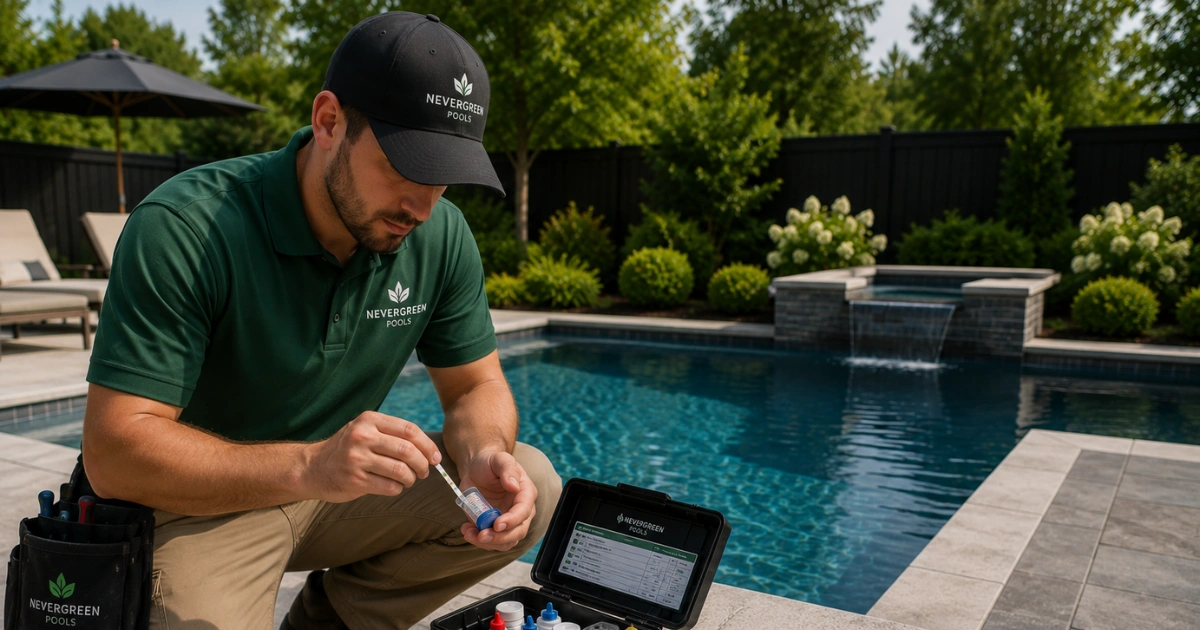
Once water is actually moving and the pressure reading looks normal, testing starts. A full panel, not a strip: free chlorine, combined chlorine, pH, total alkalinity, calcium hardness, cyanuric acid, salt if the pool runs a chlorine generator, and phosphates when the pool sits under orchard runoff. On Modesto Irrigation District water the calcium number often comes back low, and that is its own problem. Soft water is aggressive and will pull calcium out of plaster if it is left alone, so hardness gets raised on purpose rather than written off as harmless.
- Alkalinity first, because pH will not hold anywhere until it is stable.
- pH into the 7.4 to 7.6 range, corrected in stages with the pump running.
- Calcium hardness brought up to suit the surface, higher for plaster than for fiberglass or vinyl.
- Stabilizer tested and corrected, since valley sun burns unprotected chlorine off in a matter of hours.
- Chlorine last, once the water is chemically able to hold it.
Summer Heat, Harvest Dust, and the Run Schedule
From May into October the pool is fighting evaporation and sun. Long stretches over 100 degrees pull inches off the surface every week, and everything left behind gets more concentrated: calcium, salt, and cyanuric acid all climb as the water goes. A mid-season start-up on a pool that has been neglected since spring usually shows stabilizer far above where it should be, chlorine that reads fine on paper but does nothing in the water, and a filter that has not been opened in a year. That combination gets solved with a partial drain and refill more often than with more chemicals.
August and September bring the almond shake. Harvest dust drifts for miles, settles on the surface, and works into the filter as a fine gray load that spikes pressure faster than leaves ever will. During those weeks a start-up includes a filter clean at the front end and a follow-up clean shortly after, because the first one will not stay clean. Setting the run schedule is the last real step. Summer means enough hours to turn the water over completely, usually split into two blocks so the pool is not sitting still through the hottest part of the afternoon, with the schedule cut back as soon as the weather breaks.
Fall Leaf Drop and Winter Restarts
Fall is the quiet trap. The heat is gone, people stop swimming, and the pool stops getting attention right when the street trees start dropping everything at once. Leaves sink, break down, and feed the water for months. A pool left that way through a wet, foggy winter comes back in February as dark green with a layer of organic sludge on the floor, and that is a much longer job than a routine opening. Winter rain also dilutes chemistry, so alkalinity and hardness both read lower in spring than they did in November.
Because hard freezes are rare here, a winter start-up is a real option and often the smarter one. Restarting in November or December means the equipment gets inspected before it sits idle, the water carries enough chlorine and stabilizer to hold through the cold months, and circulation keeps running on a reduced schedule instead of stopping entirely. Pools handled that way in Modesto open in spring with a test panel and a filter clean rather than a full recovery.
New Plaster and Replaster Start-Ups
A newly built or freshly replastered pool is a separate procedure and gets treated as one. The fill runs continuously from start to finish, with the hose end set on a cloth or a pad so the stream never cuts into fresh plaster. Nothing goes in the water before the fill line reaches the tile. Once the pump is running, circulation stays on around the clock for the first stretch, and the surface gets brushed thoroughly, several times a day at first, to knock plaster dust down before it hardens into the finish.
Chemistry on a new surface is about protecting curing plaster, not about swimmer comfort. pH climbs on its own as the plaster cures and gets pulled back down in controlled steps, alkalinity and calcium hardness get set against the saturation index rather than a generic target, and salt stays out of the water for the first month even on a pool built for a chlorine generator. Plaster dust gets vacuumed to waste, not pushed through the filter. Skipping any of that shows up years later as etching, scale, or mottling that no amount of maintenance will undo.
Whether the pool is a decades-old gunite shell in the older part of Modesto or a new build filling for the first time, the sequence holds its shape: inspect, clean, circulate, test, correct in stages, then set a schedule the homeowner can actually run. That is what pool start-up service in Modesto is for, because a pool started correctly holds its chemistry for months, and one started in a hurry needs the same visit again in three weeks.
Related services in Modesto: Pool Maintenance in Modesto and Pool Rebalance in Modesto.