A pool in Modesto does not have one season. It has four, and each one puts something different in the water. Spring brings pollen off the almond and walnut blocks that ring the city. Late summer brings the fine gray dust that rolls in when the shakers hit the orchards. Fall brings leaf drop from the mature street trees in the older parts of town. Winter brings fog, rain, and cold water that behaves nothing like it did in July. A service plan built without that calendar in mind will hold a pool for about six weeks at a stretch and then lose it.
Nevergreen Pools handles weekly pool maintenance in Modesto in partnership with Vintage Pool Service, a longtime Central Valley company running routes out of Manteca on East Yosemite Avenue. That partnership matters because the water and the debris here are not generic. Much of Modesto is supplied by the Modesto Irrigation District with treated surface water drawn from the Tuolumne River, which is noticeably softer than the well water many valley properties depend on. Get out past the edge of town and you are back on hard well water, and the entire chemical picture shifts with it.
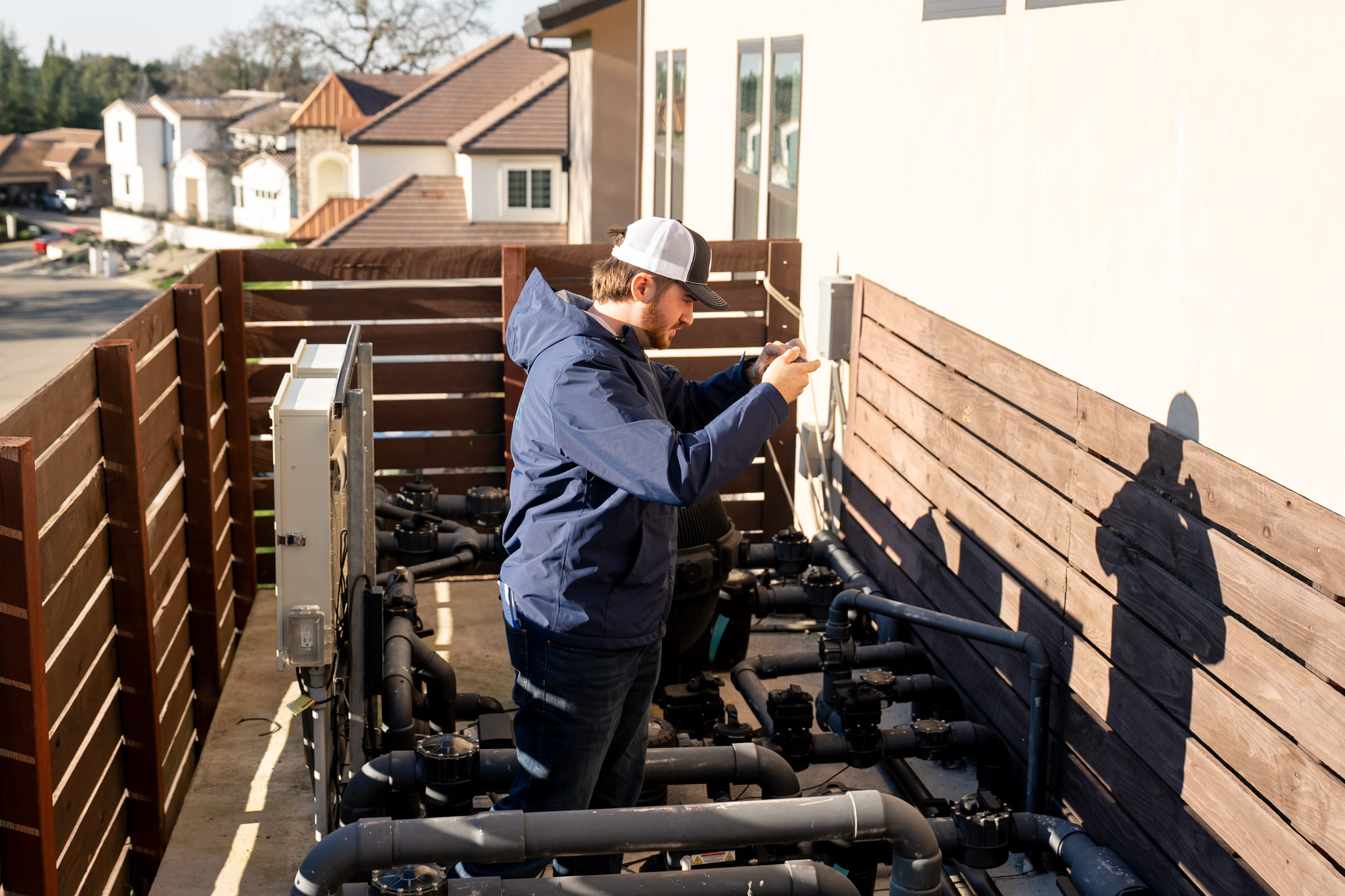
Weekly means the same tech on the same day, every week, all year. That consistency is not a scheduling nicety. It sets an interval the chemistry can actually hold: a known gap between chlorine doses, a known window before the baskets fill, and filter pressure readings taken exactly seven days apart so a rising number means something. It also means you know when the pool was serviced and what was done to it, without guessing whether the week got skipped.
Spring in the Orchard Belt
Bloom starts in February and the pollen does not stay in the orchards. It drifts into town and settles on the water as a fine yellow film that sinks, clings to plaster, and feeds algae. Pollen is organic load. It eats chlorine, it clouds the water, and it packs the pleats of a cartridge filter faster than anything else in the spring. On a weekly route we skim it off before it drops, brush the walls, steps, and the tile line where it collects in a ring, and track filter pressure every visit. When pressure climbs eight to ten PSI over the clean starting number, the filter comes apart and gets rinsed, and in spring in Modesto that often lands a month sooner than an owner expects.
Spring is also when water temperature crosses into the range where algae starts to move. Under about 60 degrees a neglected pool coasts. Once the water reaches the mid 60s and climbs into the 70s, chlorine demand rises every week, and a pool that sat stable through January will turn green in ten days. This is where weekly beats biweekly, and it is not a sales argument, it is arithmetic. The chlorine left behind on Monday is largely gone by the following Monday under valley sun. Stretch the interval to fourteen days and you are not holding a sanitizer residual at all, you are running the pool bare through the back half of every cycle and then shocking it back into shape.
Summer, When the Job Is Really Chemistry
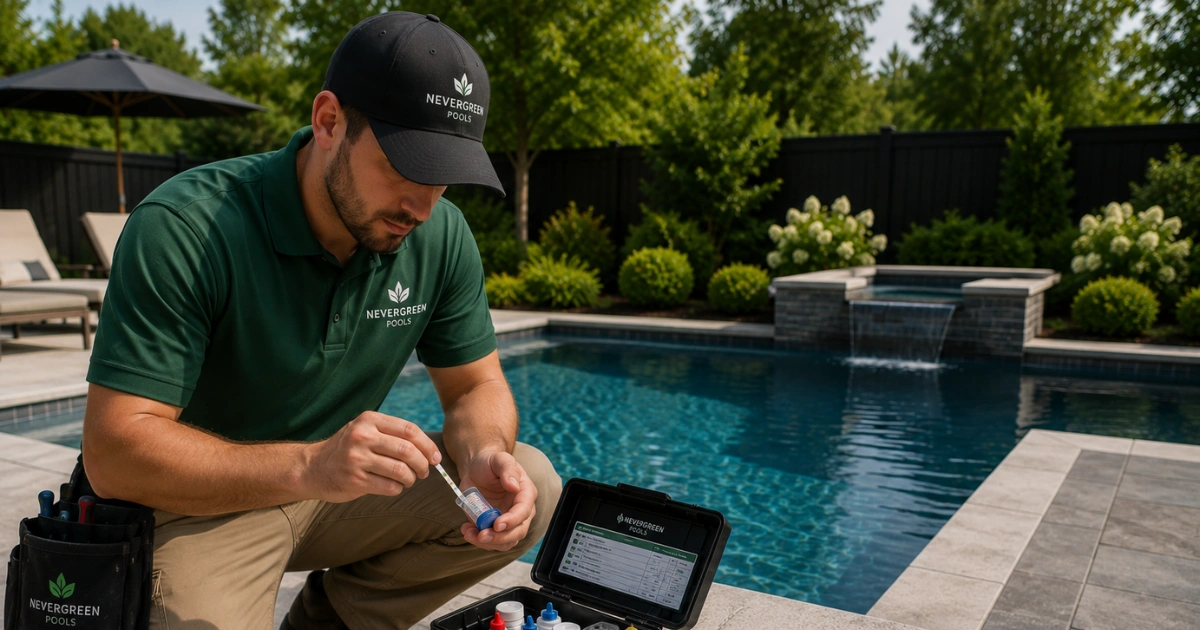
From May through October, Modesto runs hot, dry, and long, and the pool actually gets used. Every visit opens with a test, not a glance: free chlorine, pH, total alkalinity, calcium hardness, and cyanuric acid, plus a look at how the water is carrying itself. Dosing follows the reading. That sounds obvious, and it is the first thing dropped on a rushed route.
- pH drifts up all summer. Return jets and swimmers aerate the water, and once pH passes 7.8 the chlorine already in the pool loses a large share of its killing power.
- Cyanuric acid shields chlorine from UV, which matters a great deal here, but it accumulates from stabilized tablets until the pool locks up and needs a partial drain and refill rather than more chemicals.
- Calcium hardness cuts both ways in this town. Softer treated surface water in the core can leave an older plaster pool calcium hungry, and hungry water pulls minerals out of the finish. A pool topped off from hard well water outside the city runs the opposite direction and scales the tile and the heater.
- Total alkalinity is the buffer holding pH steady. Get it right and pH stops swinging. Ignore it and you are chasing pH every single week.
Heat also drives evaporation. An uncovered pool can lose a quarter inch a day in July, and a dropping level starves the skimmer throat, which lets the pump pull air and run dry. Part of every summer visit is checking level, emptying skimmer and pump baskets, clearing the pump lid strainer, and listening to the equipment. A pump that is louder than it was last week, a heater short cycling, or a chlorinator that quit feeding are all cheaper to catch on a Tuesday than after a holiday weekend.
Harvest Dust and Fall Leaf Drop
August and September are the hardest months on water clarity here, and it has nothing to do with heat. When the shakers move through the almond blocks, the dust they raise hangs in the air for miles and settles out over everything, including open water. It is fine, it is heavy, and it does not float long enough to skim. It goes straight to the floor and turns into a gray haze that filtration alone will not clear. Harvest weeks call for vacuuming the floor properly rather than brushing it into suspension, running longer filter cycles, and rinsing the filter more often than the calendar would suggest. Skipping a week in September is how a clear pool becomes a two visit recovery.
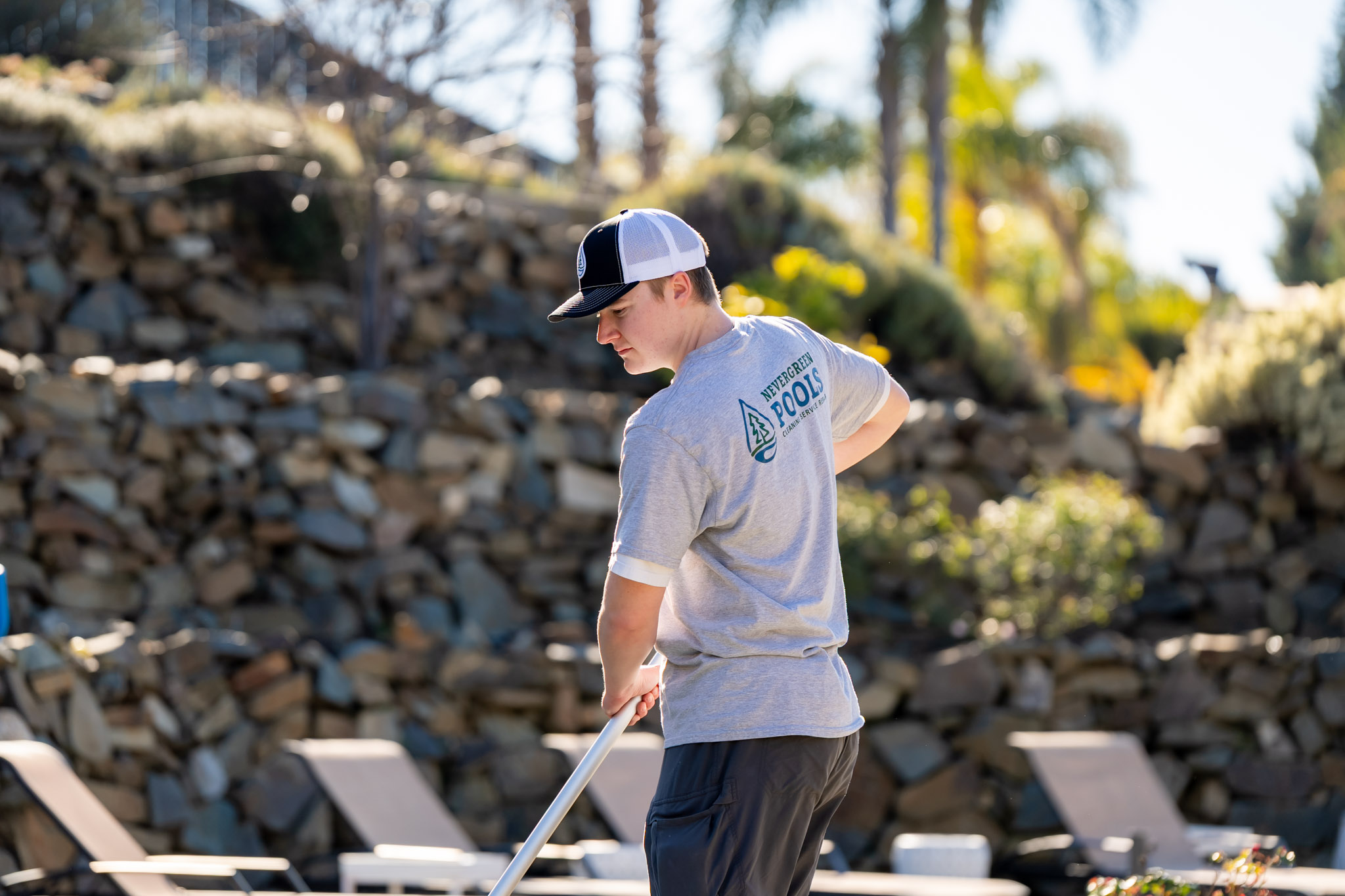
October and November shift the problem from dust to volume. The old sycamores and elms along the tree lined streets near Graceada Park and up the McHenry corridor drop steadily for weeks, and leaves left on the bottom of a plaster pool stain it. Fall service leans on skimming, emptying baskets before they overflow and stall the skimmer, and pulling debris off the floor while it is still loose. Water temperature is falling at the same time, so chlorine demand eases and dosing gets adjusted down rather than run on a summer recipe.
Winter Is Not an Off Season
A Modesto pool in December is fogged in, cold, and quiet, which is exactly why it gets neglected. Winter rain dilutes everything, dropping calcium hardness, alkalinity, and chlorine at once, and heavy runoff carries dirt off decking straight into the water. Cold water slows algae but does not stop it, and a pool that sits unbrushed for two months in the shade of bare trees will grow a black stain in the plaster that takes real work to remove. Winter visits are shorter and lighter on chemicals, but they are still visits: test, skim, brush, check the baskets, confirm the pump is cycling on its winter schedule, and verify freeze protection is working before the first hard night.
Older plaster and gunite pools in the established parts of town need that attention more than newer builds do. Aging plaster is porous, and porous surfaces hold onto whatever gets left in the water. That is the honest case for weekly pool maintenance in Modesto over a lighter schedule: it is not about doing more work, it is about never letting the pool get far enough out of range that the work becomes a repair. Same day, same tech, readings written down, and small corrections made every seven days instead of large ones made twice a season.
Related services in Modesto: Pool Maintenance in Modesto and Chemical Treatment in Modesto.