We respond same day.
Emergency services available!
Professional Pool Service
Algae Removal in Lodi
Green, mustard, or black algae in your Lodi, CA pool? We brush, shock, and treat to the algae type, then clean the filter so it does not come back.
Professional Pool Service
Green, mustard, or black algae in your Lodi, CA pool? We brush, shock, and treat to the algae type, then clean the filter so it does not come back.
Hard water is the first thing to account for on any algae job in Lodi. Local fill water carries a heavy load of calcium and often brings iron with it. High calcium hardness pushes total alkalinity and pH up over the course of a season, and pH is what decides how much of your chlorine is actually working. At a pH of 7.2, roughly two thirds of free chlorine exists as hypochlorous acid, the form that kills algae. Let that pH climb to 8.0, which hard Lodi fill water will do on its own, and you are down to around twenty percent. The test still reads chlorine. The pool still turns green. That gap is why so many homeowners here shock a pool twice and get nowhere.
The second factor is what lands in the water. Vineyard tilling and harvest put fine dust and pollen in the air that settles on the surface and sinks. Cottonwood fluff comes through every spring. Pools under mature oaks and sycamores collect leaf litter and tannin all fall. All of that organic material is food. It also carries phosphate, which is the fertilizer algae runs on, and it burns through sanitizer just sitting there. Summer air in the high nineties keeps surface water warm, and cooler nights tempt people into cutting pump run time. Those are the exact conditions algae wants.
Nevergreen Pools handles algae removal in Lodi in partnership with Vintage Pool Service, a Central Valley company that has run routes out of East Yosemite Avenue in Manteca for years and knows what Lodi fill water does to a plaster finish. The approach is the same whether the pool is a newer pebble surface or a forty year old plaster pool: identify the algae, correct the chemistry that let it grow, kill it, filter it out, and fix the circulation problem underneath.
Blooms look sudden, but they are usually the end of a week or two of low sanitizer. Pool water here in July sits in the mid eighties. At that temperature chlorine burns off fast in direct sun, and if the stabilizer level is low there is nothing protecting it. Free chlorine drops under one part per million, a spore gets a foothold, and once it starts dividing it consumes chlorine faster than a tablet feeder can replace it. Overnight the water goes from slightly dull to green. The other common trigger is a pump that runs too few hours. Cool nights make short run times feel reasonable, but if the water is not turning over completely once a day, the pool has dead zones behind the steps, under the ladder, and along the deep wall where nothing circulates and nothing gets sanitized.
It changes everything about the treatment. Green algae is free floating, it clouds the whole pool, and it dies at a normal shock level. Mustard algae, the yellow or tan dust that collects on shaded walls and brushes away in a cloud, tolerates chlorine far better and comes back from anything left on a pole brush, a float, or a vacuum head, so the gear gets sanitized along with the water. Black algae is not really algae at all in the way it behaves. It roots into plaster and gunite, especially where the finish has etched or gone porous, and it grows a waxy cap that chlorine cannot penetrate. You have to physically break that cap open with a stainless brush before any chemical will touch it, and you have to do it again every couple of days as new heads surface.
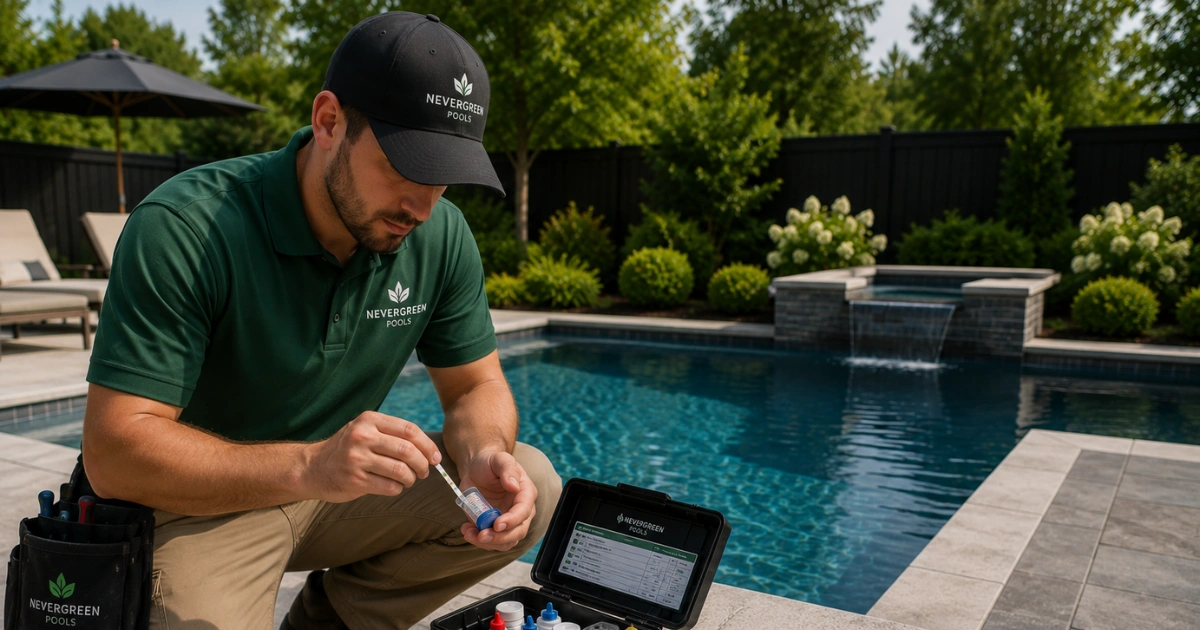
Identify it before you dose it. A strip that reads total chlorine only will not tell you what you need. Use a kit that separates free from combined chlorine and reads cyanuric acid, total alkalinity, and calcium hardness, because those four numbers set the dose and the order of operations. Match the brush to the surface too. A stainless bristle brush is right for plaster and gunite, but it will scratch vinyl, fiberglass, and some pebble finishes, which need nylon.
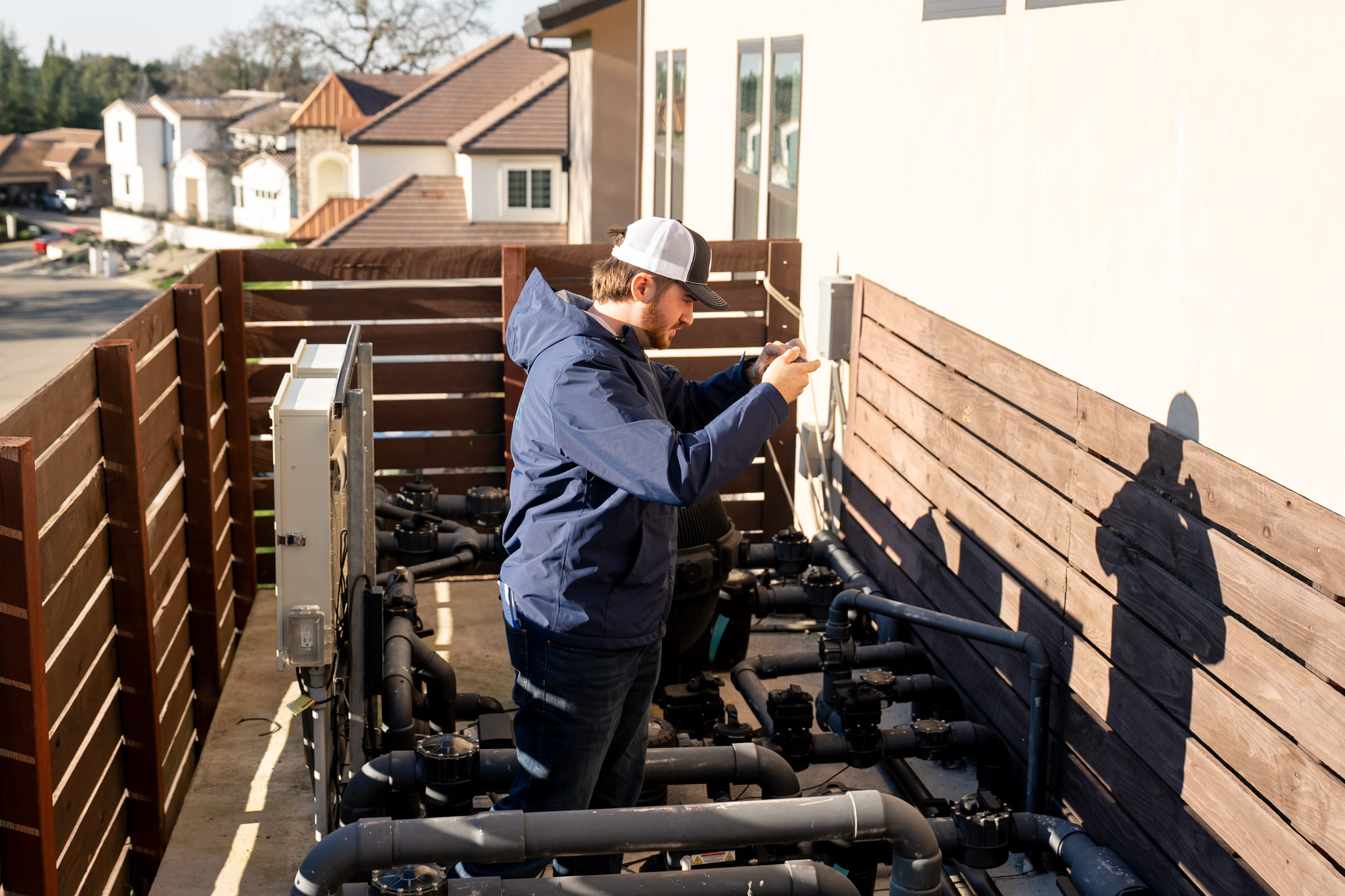
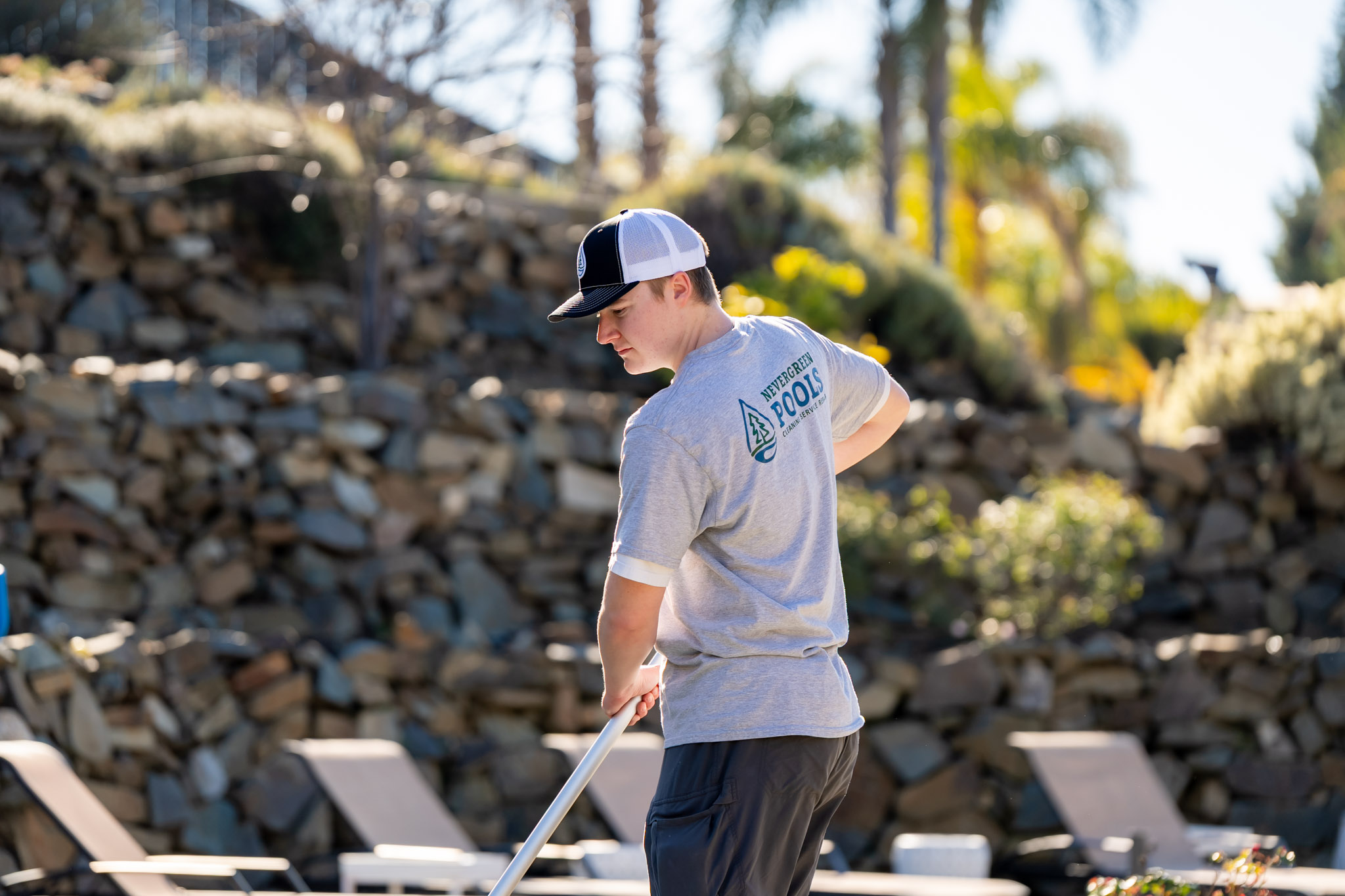
The first step is balancing, not shocking. On Lodi water that means bringing pH down near 7.2 with acid before any chlorine goes in, checking total alkalinity so the pH will stay there, and looking at calcium hardness and cyanuric acid. If stabilizer is over about eighty parts per million, chlorine is chemically locked up and no amount of shock will clear the pool, so part of the water gets drained and replaced first. Then the pool gets brushed wall to wall, floor included, to suspend the algae so chlorine can reach it. Shock goes in after dark so the sun does not burn it off, dosed to the algae type rather than to a label serving size. Green clears at roughly triple the normal shock dose. Mustard and black need more, held longer, with a copper or polymer algaecide behind it once chlorine has come back down. Phosphate remover goes in when a test shows the level is high enough to keep feeding regrowth, which is common on pools that sit under trees or near tilled ground.
After that the filter does the work. The pump runs continuously, the pool gets brushed daily, and dead algae gets vacuumed to waste rather than back through the system when the load is heavy. Vacuuming to waste drops the water level fast, so the fill line stays running to keep the skimmer from pulling air and losing prime. A cartridge filter usually needs to come out and be cleaned once or twice during the process, and a DE filter needs backwashing and recharging, because a filter packed with dead algae stops moving water and the pool stalls at cloudy gray. Write down the clean starting pressure and clean the filter again once it climbs eight to ten psi above that number. The gray stage is normal. It means the algae is dead and all that is left is filtration and patience. On a heavy bloom expect two to five days from the first dose to clear water, longer if the filter is undersized or the plaster is rough.
Regrowth is a circulation and sanitizer problem, and here it is also a debris problem. Run the pump long enough to turn the whole volume over at least once a day, and aim the returns so water actually moves in the corners and behind the steps. Keep free chlorine steady between two and four parts per million instead of letting it spike and crash between visits, and keep stabilizer in a workable range so the sun does not eat it. Because hard fill water pulls pH up, plan on regular acid so chlorine keeps its strength through the summer. Skim and empty baskets through vineyard dust season and cottonwood season, brush the walls weekly whether the pool looks dirty or not, and clean the filter on a schedule instead of waiting for pressure to climb. On pools with a history of mustard or black algae, lasting algae removal in Lodi means treating the equipment too, since one contaminated brush head will reseed a clean pool inside a week.
Related services in Lodi: Green Pool Clean-Up in Lodi and Chemical Treatment in Lodi.