Professional Pool Service
Green Pool Clean-Up in Lodi
Green pool recovery in Lodi, CA. We assess, remove debris, and decide between shock treatment and a drain and clean to bring your pool back clear.
Professional Pool Service
Green pool recovery in Lodi, CA. We assess, remove debris, and decide between shock treatment and a drain and clean to bring your pool back clear.
Lodi sits on hard groundwater, and that one fact changes how a green pool clean-up in Lodi goes compared to the same job somewhere with soft water. By the time a pool turns green, calcium hardness is usually already high, because the fill water carried it in and every top off through a run of high 90s afternoons pushed it higher. Add iron, which shows up in plenty of wells and older service lines around town, and you have a pool that does not just need the algae killed. It needs the algae killed without laying down a curtain of scale or a rust stain on the plaster during the process.
That shows up most at the shock stage. Chlorine oxidizes dissolved iron and turns it rust brown, so a pool that goes from green to brown in an hour will scare a homeowner who thinks the treatment backfired. It did not. The iron was always in the water and now it is visible. On plaster with high calcium, a hard pH swing during treatment can also etch or scale the surface, which is why the sequence has to be deliberate. Test first, correct the chemistry, then chlorinate, then filter, then correct again.
Nevergreen Pools works in Lodi in partnership with Vintage Pool Service, a longtime Central Valley company operating out of East Yosemite Avenue in Manteca. Between the two crews we recover green pools across Lodi, Stockton, Manteca, and out toward Copperopolis, on everything from an older plaster pool shaded by mature oaks to a newer build that sat unused through a foggy winter.
Nearly every green pool starts the same way. Chlorine ran out and nothing replaced it. The pump was shut off for a trip, a breaker tripped and nobody noticed, a timer failed, or the tab feeder went empty in July. Algae needs about a day of zero sanitizer in warm water to take hold, and Lodi summers run in the high 90s and low 100s, which is prime growing temperature. The cooler delta nights are nice for swimmers, but they do not slow algae down much.
What is different here is the load the water carries before algae ever shows up. Vineyard work throws fine dust and pollen into the air through bloom and again through harvest, and it drifts into pools all over Lodi. Mature oaks and sycamores over established backyards drop leaves and tannins that stain plaster and feed bacteria. In late spring, cottonwood fluff off the Mokelumne and around Lodi Lake rides the breeze in, mats on the surface, and packs skimmer baskets fast. All of that organic material is fuel. It raises chlorine demand every single day, so a lightly sanitized pool in Lodi fails faster than the same pool would in a cleaner setting.
Phosphates are the other half of it. Decomposing leaves and fertilizer runoff push phosphate levels up, and phosphate feeds algae directly. On a serious recovery we test for it, because a pool that goes back to green two weeks after clean-up almost always has a phosphate problem nobody addressed.
This is the first real decision and it moves the cost more than anything else. We look at four things:
A drain and clean turns out cheaper than chemicals more often than people expect. When hardness is off the chart or the water is truly black, the shock, clarifier, flocculant, and repeated filter cleans it takes to save that water can add up past the cost of replacing it and washing the shell. Draining is not risk free, though. Groundwater pressure in San Joaquin County can push on an empty shell, and plaster that bakes dry in direct summer sun can craze. We drain in the cooler part of the day, work fast, and do not leave a plaster pool sitting empty.
An acid wash is a separate call. It strips a thin layer off the plaster and takes stains and algae roots with it, and it works well on the calcium and iron staining common in Lodi. It also shortens the life of the surface, so it is not something to do casually. On plaster that is already thin or exposed, we recommend a gentler chemical approach and an honest conversation about replastering instead.


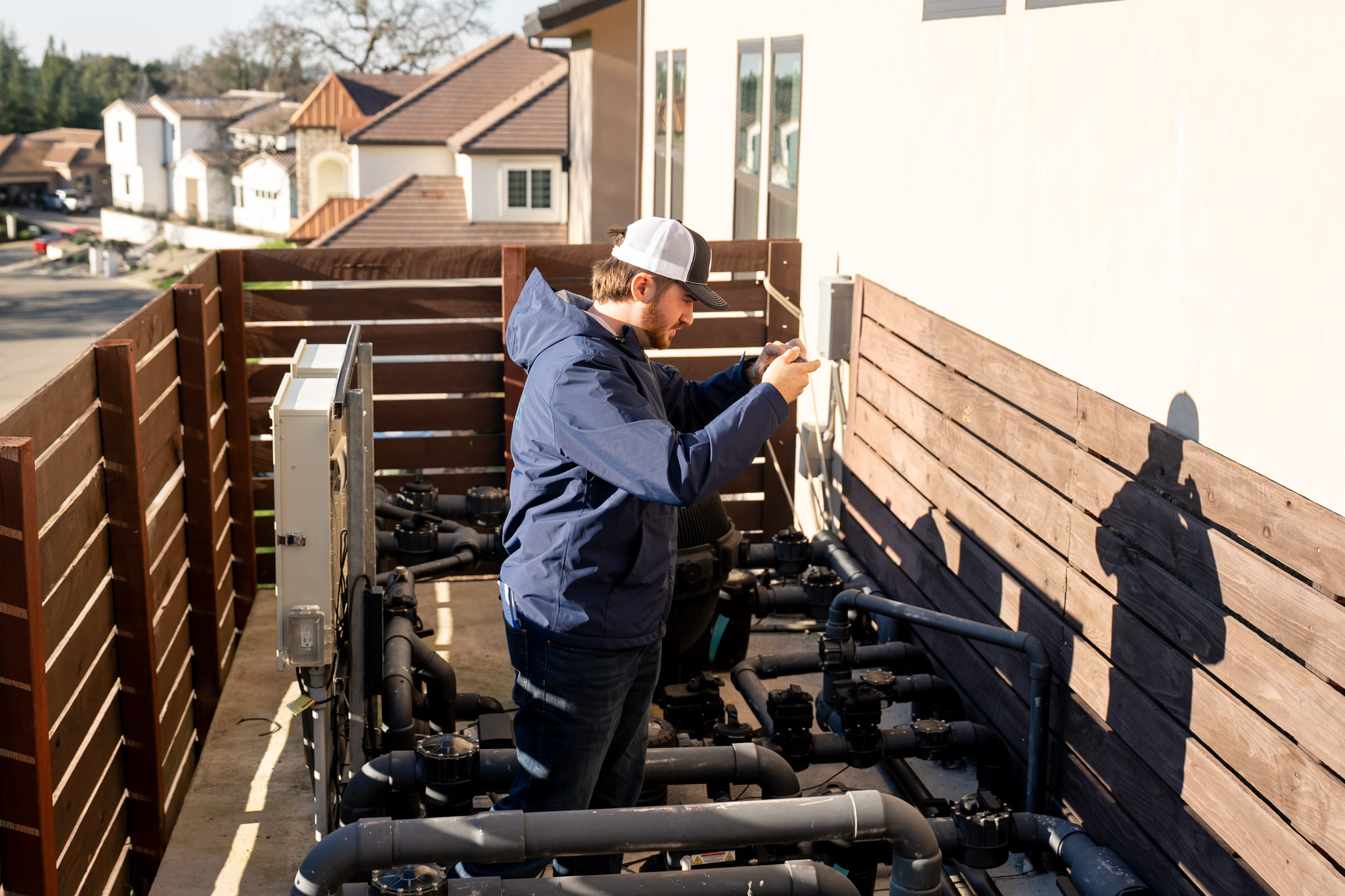
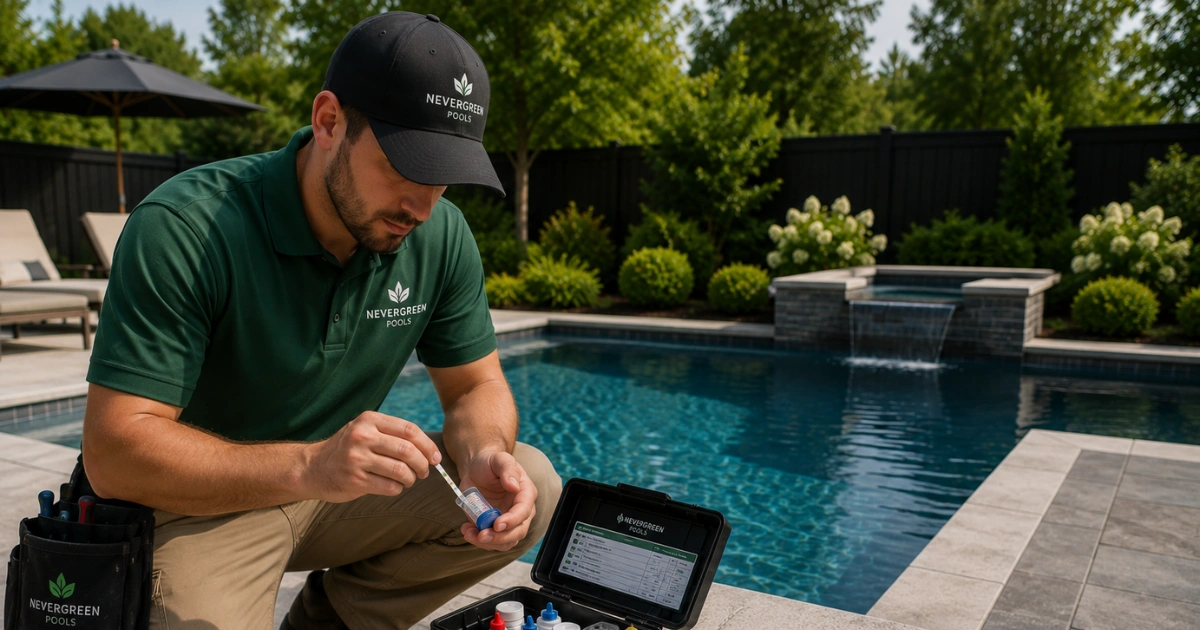
Work starts with a full test and a walk of the equipment pad. Free chlorine, pH, alkalinity, calcium hardness, cyanuric acid, and often phosphates and metals. Then the pump, filter, and valves get checked, because a green pool clean-up in Lodi is really a filtration job with chemistry attached. If the filter cannot move and hold dead algae, no amount of chlorine finishes the job.
Debris comes next. Leaves, branches, and sludge come out with nets and a heavy duty vacuum that sends waste to the sewer rather than back through the system. Baskets get emptied, and on a cartridge filter the elements come out to be cleaned or replaced, since pushing a swamp through loaded cartridges wastes days.
Then chemistry, in order. pH gets pulled into range first so chlorine can work, alkalinity gets corrected so pH holds, and only then does the pool get shocked hard. On iron heavy water we add a sequestering agent before the chlorine goes in so the metal stays in solution instead of plating onto the plaster. The pump runs continuously. Within a day the water usually shifts from green to cloudy gray or milky blue, which looks worse to a homeowner and is actually the sign it is working. The algae is dead and suspended, waiting to be filtered out.
From there it is filter, brush, backwash, repeat. Brushing matters more than people expect, especially walls, steps, and the shaded side behind a ladder where algae hides. A flocculant is sometimes used to drop everything to the floor so it can be vacuumed to waste in one pass. Sand and DE filters get backwashed several times through the recovery, and DE gets recharged after each one.
Most run three to seven days. A light green pool caught early can be swimmable in two or three. A dark swamp with a foot of leaves on the floor and a struggling filter takes the full week. A drain and clean with an acid wash is usually two to three days of work plus refill time, and refilling with hard Lodi water means building the balance from scratch, which adds a visit.
The last step is the part that keeps it from happening again. That means cyanuric acid set correctly so the summer sun does not burn off chlorine by noon, a working timer with enough run time for the heat, a phosphate remover if levels came back high, and a real schedule for brushing and emptying baskets through leaf drop and cottonwood season. Most repeat green pools in Lodi are not chemistry failures. They are circulation and attention failures, and both of those are fixable.
Related services in Lodi: Algae Removal in Lodi and Pool Rebalance in Lodi.